Key takeaways
- PWM controllers are simple and inexpensive. They pull the panel voltage down to the battery’s voltage, so the panel and battery should be a close nominal match, such as a 12 V panel for a 12 V battery.
- MPPT controllers convert extra panel voltage into extra charging current. They allow higher-voltage panel strings and tend to harvest more in cold or hazy conditions, and they cost more.
The best solar DC battery charger for most 12 V systems is an MPPT solar charge controller sized to your panels: Victron’s SmartSolar MPPT 100/30 and Renogy’s Rover Li 30A or newer Rover 2 30A suit permanent RV, van and cabin installs, while a ready-made portable solar suitcase with its own controller suits people who just want to clip panels to a battery and go.
Our top picks

As an Amazon Associate we earn from qualifying purchases at no extra cost to you.
What a “solar DC battery charger” is
The keyword is a little loose, so here is the clearest meaning. A solar DC battery charger is the device between a solar panel and a battery that turns the panel’s variable output into the voltages and currents the battery needs. In practice it is a charge controller. Without one, a panel can overcharge and damage a battery. There are two main kinds.
- PWM controllers are simple and inexpensive. They pull the panel voltage down to the battery’s voltage, so the panel and battery should be a close nominal match, such as a 12 V panel for a 12 V battery.
- MPPT controllers convert extra panel voltage into extra charging current. They allow higher-voltage panel strings and tend to harvest more in cold or hazy conditions, and they cost more.
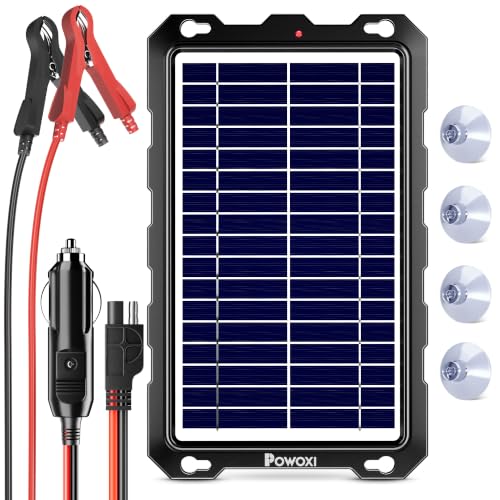
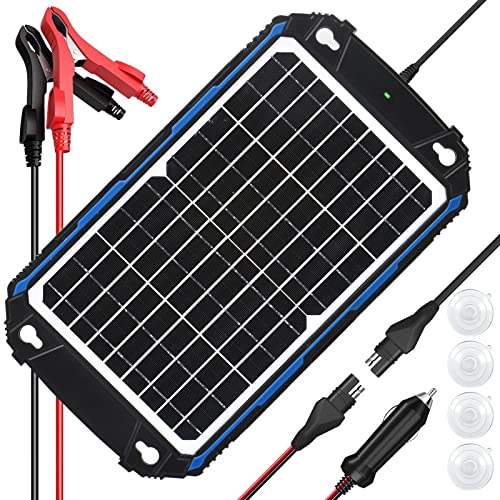
A third meaning appears in the search results too: small “trickle” solar chargers that sit on a dashboard to keep a parked vehicle’s battery topped up. Those are a different, low-power product and are not the focus here; they are mentioned briefly in the alternatives section.
At a glance
| Model | Type | Key stated specs | Best for | Limits |
|---|---|---|---|---|
| Victron SmartSolar MPPT 100/30 | MPPT | 12 V or 24 V auto-select, 30 A rated charge current, 440 W PV at 12 V (880 W at 24 V), 100 V max PV open-circuit voltage, up to 98% efficiency, Bluetooth and VE.Direct port, no fan | Permanent installs where monitoring and lithium settings matter | Premium tier; IP43 electronics, so mount it in a dry location |
| Renogy Rover Li 30A | MPPT | 12/24 V, 30 A, 400 W at 12 V and 800 W at 24 V, 100 VDC max PV (95 V recommended in cold), RS485 port, IP32 | Mid-range builds on a known brand | Not waterproof, older and larger footprint; no built-in fuse |
| Renogy Rover 2 30A | MPPT | PV input 15 to 100 VDC, 450 W at 12 V and 900 W at 24 V, built-in Bluetooth and RS485, compact | Tight spaces and phone monitoring | Different product from the Rover Li; size the array to its own limits |
| Renogy 200W portable suitcase with PWM controller | Portable PWM kit | Maker lists a 20A PWM controller, alligator clips to a battery, fold-up case; listed weights vary by version | Temporary or movable charging | Needs a 12 V battery; cannot run 120 V outlets without an inverter; listings show backorders at times |
How to size a solar DC charger
Match the controller to the panels
Three numbers matter: the controller’s maximum PV voltage, its maximum PV power, and its rated charge current. Add panels in series and the voltage adds. Do not let cold-weather open-circuit voltage exceed the controller’s limit; Renogy specifically lists a lower recommended maximum of 95 V for the Rover Li at low temperatures. Add panels in parallel and the current adds, which must stay inside the controller’s input current limit. Victron lists a 35 A maximum PV short-circuit current for the SmartSolar 100/30.
Match the controller to the battery
Check that the controller has a profile for your battery chemistry. Victron lists default charge voltages of 14.4 V absorption and 13.8 V float at 12 V, both adjustable, with temperature compensation of minus 16 mV per degree Celsius at 12 V. Lithium batteries often want a different profile and no temperature compensation, so use the battery maker’s numbers.
Think about wire and fuse size
Victron lists a minimum 35 A and maximum 40 A battery fuse for the 100/30, and 16 mm squared (AWG 6) terminals. Renogy lists 8 AWG maximum terminal size for the Rover Li and says the unit has no built-in fuse. Its manual lists a 30 A to 40 A battery fuse and its FAQ names 40 A, so use the manual that ships with your unit and size the fuse to your wire.
The picks in more detail
Victron SmartSolar MPPT 100/30
This is the premium pick when you want visibility. Bluetooth via the VictronConnect app lets you view and change settings, and a VE.Direct port allows wired monitoring. The maker lists an operating range of minus 30 C to plus 60 C with full output up to 40 C, and no cooling fan. The PV voltage must exceed battery voltage plus 5 V to start, and after that it needs at least battery voltage plus 1 V. That start-up rule matters on small 12 V panels in low light.
Renogy Rover Li 30A and Rover 2 30A
Renogy lists two 30 A Rover controllers, and the differences are real. The Rover Li is the older, larger unit with a 400 W 12 V PV limit and an IP32 rating, meaning it is not waterproof. The Rover 2 raises the 12 V PV limit to 450 W, adds built-in Bluetooth and is much smaller and lighter. Because the names are close, the product page for the exact model matters when you size the array.
Portable suitcase kits
Renogy lists a 200 W suitcase made from two 100 W panels with a controller and clips. The maker says it estimates about 1 kWh per day assuming 5 hours of sun, which is a marketing estimate rather than a guarantee. The suitcase is aimed at charging a 12 V battery, and the maker notes it cannot power 120 V outlets directly. Several listings show backorders, so availability varies.
Budget tiers
- Budget: A basic PWM controller or a suitcase kit with a PWM controller. Works when panel and battery voltages match and you do not need maximum harvest.
- Mid-range: Renogy Rover Li or Rover 2 MPPT. Reasonable for most RV roofs.
- Premium: Victron SmartSolar. Pay for monitoring, a deep settings menu and a well-documented manual.
Install and safety notes
- Follow the controller manual’s wiring order exactly. Makers commonly specify battery connection before panel connection; the manual is the authority.
- Fuse or breaker both the battery side and, where the manual calls for it, the panel side. Use wire sized to the current and the run length.
- Do not mount a non-waterproof controller where it can be rained on or splashed. IP32 and IP43 ratings are not for outdoor exposure.
- Panels produce voltage in daylight and cannot be switched off at the panel. Treat wiring as live and cover panels while working if the manual suggests it.
- Hardwired work that ties into a building or a vehicle’s 120 V system should be done by a licensed electrician following local code. Use only listed equipment as the maker states.
- Never bypass a controller’s protections, and never connect panels directly to a lithium battery.
Pick X if…
| If you… | Pick | Why |
|---|---|---|
| Want app monitoring and detailed settings | Victron SmartSolar MPPT 100/30 | Bluetooth and VE.Direct are listed by the maker |
| Have a cramped install | Renogy Rover 2 30A | The maker lists a compact size |
| Want a familiar mid-range brand | Renogy Rover Li 30A | 400 W at 12 V, RS485 port, 8 AWG terminals |
| Want to move panels between locations | Renogy 200 W suitcase | Portable case with clip leads and controller |
| Run a 24 V battery bank | Either MPPT above | Both makers list 24 V support, with higher power at 24 V |
Alternatives
- Small trickle chargers: low-power panels that plug into a vehicle’s outlet for maintenance. They keep a battery from slowly draining but are not meant for heavy use.
- Solar generators or power stations: they combine a battery, charge controller and inverter in one box.
- Combination chargers: some inverter-chargers accept both shore power and solar and suit larger systems; they are usually specified by an installer.
Frequently Asked Questions
Do I need MPPT or is PWM enough?
PWM is enough for a small system with a panel matched to the battery voltage. MPPT is worth it when you have a larger array, higher-voltage panels or long wire runs, because it can convert extra voltage into more charging current.
What size controller do I need?
Divide the array’s wattage by the battery voltage to get approximate current, then pick a controller with a rated current above that. A 30 A controller like the Rover Li 30A lists 400 W at 12 V, and the Victron 100/30 lists 440 W at 12 V.
Can I charge a lithium battery from a solar controller?
Yes if the controller has a lithium profile or adjustable voltages that match the battery maker’s numbers. Renogy lists lithium compatibility on its Rover Li line, and Victron’s voltages are adjustable.
Can I connect a panel directly to a battery?
Only with very small panels designed for it. Larger panels need a controller to avoid overcharging. Follow the panel and battery manuals.
Is a portable solar suitcase better than roof panels?
A suitcase lets you chase the sun and park in shade, but must be set up and stowed each time. Roof panels charge automatically while you are away from camp, though they sit fixed at the roof angle.
Where should the controller be mounted?
Close to the battery, dry, ventilated and away from heat, following the maker’s manual. Shorter, thicker wire between controller and battery reduces voltage drop.