Key takeaways
- Dimensions. Measure the battery box. The LA105 is longer than the LA95 according to the maker, so check each model’s datasheet.
- Ventilation and sealing. AGM and lithium are sealed, but follow the maker’s manual on orientation and ventilation. Lithium batteries rated IP22 should not be in a wet locker.
- Charging. Use a charger with the right profile. Do not use a lead-acid float setting on lithium unless the maker allows it.
- Cabling and fuses. Fit a fuse close to the battery positive terminal, size the cable for the maximum current, and tighten terminals to the maker’s torque. Victron lists 10 Nm for the 100 Ah terminals.
- Mains and hook-up wiring. Any 230 V wiring, consumer unit or inverter-charger installation is electrician work. Follow the manual and local regulations.
- Never mix. Do not combine old and new batteries or different chemistries in one bank.
- Boats. Marine installations have their own rules for battery boxes and isolators; follow the relevant standard.
The best deep cycle leisure battery for most caravan, motorhome and boat owners is a sealed AGM leisure battery from a known maker such as Varta if you want a straightforward replacement that works with an ordinary charger, while a 12 V 100 Ah lithium iron phosphate leisure battery from Renogy or Victron suits owners who want lighter weight, more usable capacity and are prepared to check their charging equipment. “Leisure battery” is the UK and European name for the second battery that runs lighting, a fridge, water pump and electronics in a caravan, campervan or boat, separate from the starter battery. It is built to be discharged repeatedly, which is what “deep cycle” means.
Our top picks



As an Amazon Associate we earn from qualifying purchases at no extra cost to you.
Leisure battery versus starter battery
A starter battery delivers a short, high-current burst to turn an engine and is not designed to be run flat. A leisure battery delivers modest current for hours and is designed to be discharged and recharged many times. That is why leisure batteries are listed by amp hours (Ah) and cycle life, while starter batteries are listed by cold cranking amps. Some AGM batteries, such as Varta’s Professional Dual Purpose line, are marketed for both jobs, which is handy for a small boat that wants one battery to do everything, but a dedicated deep cycle model is the usual choice for the habitation side of a caravan or motorhome.
When you read specifications, note the chemistry, the amp hours, the weight, and the maker’s cycle-life statement, which is tied to a depth of discharge. Varta states that its Professional Deep Cycle AGM line offers up to 800 cycles at 50 percent depth of discharge, and describes it as built for electric boats, yachts and motorhomes. Lithium makers state cycles at 80 percent or more depth of discharge. These numbers are not directly comparable unless the depth is the same.
At a glance: confirmed current options
| Battery | Best for | Key stated specs | Limits |
|---|---|---|---|
| Varta Professional Deep Cycle AGM, 830 150 090 (LAD150) | Motorhomes and boats wanting large AGM capacity | 150 Ah; 484 by 171 by 241 mm; up to 800 cycles at 50 percent DOD stated for the line; maintenance-free | Heavy; only half the capacity is the intended regular use |
| Varta Professional AGM 840 095 085 (LA95) | Caravans, motorhomes and boats with high energy demands | 95 Ah; listed 850 A cold cranking; 353 by 175 by 190 mm | Dual-purpose design rather than pure deep cycle |
| Varta Professional AGM 840 105 095 (LA105) | Similar uses, slightly larger | 105 Ah; 950 A cold cranking listed; 394 by 175 by 190 mm per the maker’s page | Longer than the LA95; measure the battery box first; retailer weights differ |
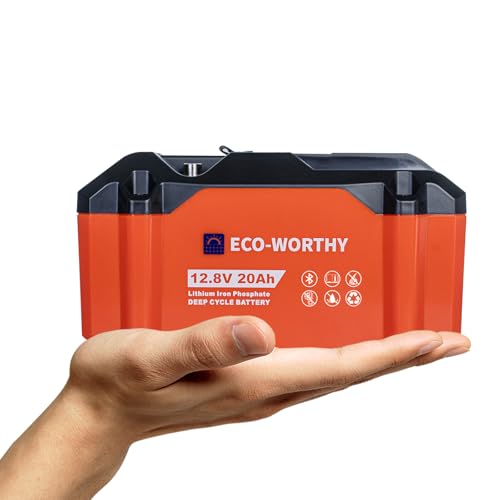
| Renogy 12 V 100 Ah Pro lithium leisure battery | Cold-climate campers wanting monitoring | 12.8 V nominal; 1,280 Wh; 100 A max charge and discharge; Bluetooth; self-heating below 41 degrees F; IP67; 26.9 lb; parallel connection only | Warranty terms and listings differ by region; check the maker’s page for your country |
| Victron LFP-Smart 12.8/100 | Owners building a monitored system with Victron charge equipment | 1,280 Wh; 92 percent round-trip efficiency; recommended charge current 50 A or less; charge 5 to 50 degrees C; Bluetooth; up to 20 per system | IP22 only; no charging below 5 degrees C |
AGM leisure batteries: Varta Professional range
Varta’s Professional AGM batteries use absorbent glass mat technology, which holds the electrolyte in a glass mat so the battery is sealed and maintenance-free. The maker highlights shock and vibration resistance and minimal self-discharge, which suits seasonal use. The Deep Cycle model covered here is the 830 150 090 (LAD150), listed by the maker at 150 Ah and 484 by 171 by 241 mm. A separate Professional Dual Purpose AGM range lists the LA95 at 95 Ah and 850 A, and the LA105 at 105 Ah and 950 A, aimed at motorhomes, caravans and boats with high energy demands.
AGM is the lowest-fuss upgrade from a flooded battery. It needs no topping up and can be fitted in different orientations according to the maker’s manual, and it generally charges well from a standard caravan charger or a vehicle alternator through a split-charge arrangement. The trade-offs are weight and the fact that only part of the rated capacity is meant for regular use if you want long life.
Lithium leisure batteries: Renogy and Victron
Renogy sells a 12 V 100 Ah Pro series lithium battery that suits leisure use, with listings in several regions. The maker lists 12.8 V nominal voltage, 1,280 Wh, 100 A maximum charge and discharge, a 245 A peak for 30 seconds, an IP67 rating, UL94-V0 flame retardant casing, Bluetooth monitoring, and a self-heating function that turns on below 41 degrees F and stops above 50 degrees F. It can only be connected in parallel, not in series, and the maker’s US page lists a 7 year prorated warranty. Warranty terms can differ by region, so check the page for your country.
Victron’s LFP-Smart 12.8/100 lists 100 Ah, 1,280 Wh, 92 percent round-trip efficiency, a charge voltage of 14 to 14.4 V and a float of 13.5 V. The recommended charge current is 50 A or less. It discharges from minus 20 to 50 degrees C but charges only from 5 to 50 degrees C. It has Bluetooth through the VictronConnect app, M8 threaded terminals and a stated ability to connect in series, parallel or series-parallel in banks of up to 20. The protection class is IP22, which means it should live inside a dry compartment.
Lithium or AGM?
Lithium batteries are lighter for the capacity, accept faster charging and generally allow deeper regular discharge. Renogy’s Pro 100 Ah weighs 26.9 lb in its US listing, and the Varta LAD150 is considerably heavier per usable amp hour; retailer weight figures for it differ, so check the datasheet. Lithium costs more up front. It also has cold-charge limits: Victron’s battery should not be charged below 5 degrees C, and Renogy’s Pro series warms itself before charging. AGM tolerates a wider range of old chargers and is simpler to retrofit.
If your caravan or motorhome has an older charger, a lead-acid-only charging profile or an alternator-fed split-charge relay, a lithium battery may need an upgrade to a lithium-compatible charger or a DC-DC charger. Check the maker’s charge settings and compare them with your charging equipment before buying.
Sizing your leisure battery
- Add up daily usage. Estimate watt-hours: LED lights, a compressor fridge, a water pump, phone charging, a laptop, a diesel heater fan.
- Convert to amp hours. Divide watt-hours by 12. A daily total of 600 Wh is about 50 Ah of use.
- Apply depth of discharge. If you want AGM to last, plan on using about half the rated capacity, so you need about double the daily amp hours. Lithium makers state much deeper usable capacity.
- Add margin for days without charging. Hook-up free weekends or winter use need more.
- Check the largest load. An inverter running a kettle, hairdryer or microwave pulls a lot of current. Check the battery’s maximum continuous discharge and use correctly rated cable and fuses.
Fitting, compatibility and safety
- Dimensions. Measure the battery box. The LA105 is longer than the LA95 according to the maker, so check each model’s datasheet.
- Ventilation and sealing. AGM and lithium are sealed, but follow the maker’s manual on orientation and ventilation. Lithium batteries rated IP22 should not be in a wet locker.
- Charging. Use a charger with the right profile. Do not use a lead-acid float setting on lithium unless the maker allows it.
- Cabling and fuses. Fit a fuse close to the battery positive terminal, size the cable for the maximum current, and tighten terminals to the maker’s torque. Victron lists 10 Nm for the 100 Ah terminals.
- Mains and hook-up wiring. Any 230 V wiring, consumer unit or inverter-charger installation is electrician work. Follow the manual and local regulations.
- Never mix. Do not combine old and new batteries or different chemistries in one bank.
- Boats. Marine installations have their own rules for battery boxes and isolators; follow the relevant standard.
Budget tiers
The budget tier is a basic AGM leisure battery in the 80 to 100 Ah class. The mid-range tier is the Varta Professional line and entry lithium. The premium tier is Victron with its monitoring ecosystem and self-heating lithium for cold climates. Over a long life, lithium can be competitive on cost per cycle, but only if the charging equipment is right.
Pick X if you
| Pick this | If you |
|---|---|
| Varta LAD150 | want a large sealed AGM and have the space and a suitable charger |
| Varta LA95 or LA105 | want a dual-purpose AGM for a smaller boat or van |
| Renogy Pro 100 Ah | camp in cold weather and want Bluetooth monitoring and self-heating |
| Victron LFP-Smart 12.8/100 | want to expand later and already use Victron chargers or monitors |
Alternatives to consider
Flooded deep cycle batteries
Traditional flooded batteries are cheaper per amp hour but need watering and ventilation. Trojan’s T-105 is a well-known six-volt example rated 225 Ah at the 20 hour rate and weighing 62 lb.
Portable power stations
A portable power station with a built-in battery can run a campsite fridge or lights without any permanent wiring.
Solar top-up
A small panel and controller can keep a leisure battery topped up while parked. Match the controller to the battery chemistry.
Frequently Asked Questions
What size leisure battery do I need for a caravan?
It depends on daily consumption, hook-up use and the mover. Many caravans use a single battery in the 80 to 110 Ah range, but a heavy user may want more. Calculate watt-hours and allow for the depth of discharge.
Can I charge a leisure battery from my car?
Usually through a split-charge relay or DC-DC charger. For lithium, a DC-DC charger with a lithium profile is the safer route, since a direct alternator connection can overload the alternator. Follow the maker’s manual.
Is a dual-purpose AGM battery a good leisure battery?
It can be for light use and boats, since Varta markets its Dual Purpose line for both starting and energy supply. For heavy habitation use, a dedicated deep cycle battery is the usual choice.
How long does a leisure battery last?
It varies with chemistry, depth of discharge and care. Varta states up to 800 cycles at 50 percent depth of discharge for its Deep Cycle AGM line, while lithium makers state several thousand cycles at stated depths.
Can I fit a lithium battery in place of my AGM?
Often yes, but check physical size, charger profile, cold-weather charging and the vehicle’s charging system, and follow the maker’s manual. A licensed electrician should handle any mains or hardwired changes.
Do leisure batteries need maintenance?
Sealed AGM and lithium need no topping up. Keep them charged, keep terminals tight and clean, and store them charged if the vehicle sits for months.