Key takeaways
- Grid connection. Follow the maker’s manual and local regulations. Do not modify a plug-in kit, remove its protections or connect it to a circuit it is not intended for.
- Licensed help. Permanent AC wiring, consumer unit changes and large storage systems should be installed by a licensed electrician or accredited installer.
- Listed equipment. Use the inverter, cables and connectors the maker specifies. Do not mix connector brands unless the maker says it is compatible.
- Panel voltage. Solar panels produce voltage whenever light hits them. Treat cables as live and follow the manual.
- Off-grid fusing. Fuse the battery and controller connections as the manual describes, and use cable sized for the current.
- Working at height. Roof or balcony installation carries fall risk. Use appropriate access equipment or hire a professional.
For most households, the best kit of placas solares fotovoltaicas (photovoltaic solar panel kit) is a plug-in grid-connected balcony or self-consumption kit with a microinverter, such as the EcoFlow PowerStream or a Zendure SolarFlow model if you want optional battery storage, where local rules allow it, while a 12 V off-grid kit such as a Renogy starter kit suits a shed, van, boat or cabin that is not connected to the mains. The phrase “kit placas solares fotovoltaicas” is Spanish for a photovoltaic solar panel kit, and it covers two quite different products: self-consumption kits that feed a home’s electrical system through an inverter, and small off-grid kits that charge a 12 V battery through a charge controller. Choosing the wrong type is an easy mistake, so this guide separates them first. Rules for connecting solar equipment to a home differ widely between places, so this guide stays neutral on them and points you to a local installer.
Our top picks


As an Amazon Associate we earn from qualifying purchases at no extra cost to you.
Two kinds of kit
Grid-connected self-consumption kits (autoconsumo)
These pair panels with a microinverter that converts panel output to household alternating current. They reduce the electricity you draw from the grid while the sun is shining. Many versions are marketed as balcony power plants and plug into a socket, but whether that is allowed differs by country and by region, including limits on inverter output, registration requirements and the type of plug allowed. Rules also change, and a kit that is sold legally in one country may not be allowed to be connected in another. Ask the distributor, the network operator or a licensed installer what applies where you live, and follow the maker’s manual and local code. Any hardwired connection to a consumer unit is work for a licensed electrician.
Off-grid 12 V kits
These pair panels with a charge controller and a battery, and they run 12 V loads or an inverter. They are common in vans, boats, sheds and cabins. They do not feed the mains and are not regulated in the same way, though correct fusing and cabling still matter.
At a glance: confirmed current options
| Kit | Best for | Key stated specs | Limits |
|---|---|---|---|
| EcoFlow PowerStream (balcony kit, 800 W version) | Flats and houses wanting a plug-in kit that can use an EcoFlow power station as a battery | Microinverter upgradable from 600 W to 800 W; two PV inputs rated 400 W each; AC output 800 W or 600 W grid-tied; PV operating range 11 to 55 V; about 3 kg; IP67; batteries from 256 Wh to 3.6 kWh in the range | Needs a compatible EcoFlow power station for storage; regional output limits apply |
| EcoFlow STREAM range | Buyers who want newer stackable storage kits | STREAM microinverter 800 VA at 230 V AC with two 600 W MPPT channels; a single input capped at 430 W; STREAM 5000 listed at 5,000 W PV input and 3,000 W output with 5,024 Wh | The maker states the STREAM 5000 cannot be combined with PowerStream in one system |
| Zendure SolarFlow 800 | DC-coupled systems with optional batteries | 1,200 W MPPT total and 800 W bidirectional inverter; each input up to 600 W; starts generating at 14 V; about 5 kg; IP67; certified to VDE-AR-N 4105 and EN 50549 as stated; stackable batteries up to 11,520 Wh with up to 6 units | Battery modules sold separately; certifications refer to the stated standards and local rules still apply |
| Renogy 100 W 12 V starter kit | Off-grid beginners, sheds, boats, vans | One 100 W N-type panel (Pmax 100 W, Voc 22.79 V, 13.0 lb, up to 25 percent cell efficiency); Wanderer 30 A PWM controller; expandable up to 400 W; about 500 Wh per day with 5 hours of direct sun per the maker | PWM controller is less efficient than MPPT; battery sold separately |
| Renogy 200 W 12 V starter or RV kits | Larger off-grid needs | Two 100 W panels with a controller and cables; the RV kit adds a Bluetooth module and the maker says it can be expanded to 400 W | Availability varies by region, with some pages showing backorder or unavailable |
EcoFlow: PowerStream and STREAM
The PowerStream is built around a microinverter. The EU product lists an 800 W AC output (600 W where the lower setting is used), PV inputs of 400 W each, a PV operating voltage range of 11 to 55 V, a size of 242 by 169 by 33 mm and about 3 kg, with IP67 protection. It is designed to work with EcoFlow portable power stations as the battery, and the maker’s page says the microinverter feeds up to 800 W to the home.
The newer STREAM range includes a microinverter rated 800 VA at 230 V with two 600 W MPPT channels, a start-up voltage of 20 V and a single-input cap of 430 W, with the dual-input total following local regulations. The larger STREAM 5000 listing is a self-consumption kit with 5,000 W of PV input, 3,000 W output and 5,024 Wh of battery capacity, and variants with four or eight 500 W panels are listed. The maker also states it cannot be used with PowerStream in the same system.
Zendure SolarFlow
Zendure’s SolarFlow 800 is a hybrid microinverter with a 1,200 W MPPT stage and an 800 W bidirectional inverter. Each MPPT input handles up to 600 W with open-circuit voltage below 55 V, it begins generating at 14 V, and it is rated IP67. The maker lists certification to VDE-AR-N 4105 and EN 50549 and says it plugs into a household socket. It supports Zendure AB1000, AB2000, AB1000S and AB2000S batteries, with up to six units stacked for 11,520 Wh. Zendure sells several SolarFlow variants, including a Pro version with a built-in battery, and older hub-and-microinverter sets, so specifications differ by model: match the exact model name and page before buying.
The SolarFlow design is DC-coupled with its own 48 V battery, whereas PowerStream pairs with EcoFlow power stations. In short, SolarFlow offers more PV capacity headroom and an earlier start-up voltage, while PowerStream is lighter.
Renogy for off-grid kits
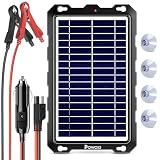
Renogy’s 100 W 12 V starter kit includes a 100 W monocrystalline N-type panel, a Wanderer 30 A PWM charge controller, Z-brackets, a 20 ft 10 AWG solar adaptor kit and an 8 ft tray cable. The maker lists the panel at Pmax 100 W, Voc 22.79 V, Isc 5.31 A, Vmp 19.97 V and Imp 5.01 A, measuring 34.1 by 22.8 by 1.2 inches. The controller is 12 V nominal, 30 A rated, supports sealed, gel, flooded and lithium batteries, and the system can be expanded up to 400 W with more of the same panels. The maker says a 100 W panel yields about 500 Wh a day with 5 hours of direct sun.
The 200 W kits come as a starter kit with two 100 W panels and a 30 A PWM controller, and an RV version with a Bluetooth module. Availability varies by region and over time, so confirm with the maker that a given kit is on sale where you live. An older Premium kit uses an MPPT controller, which extracts more energy in cool, bright conditions and when panel voltage is well above battery voltage.
Sizing a kit
- Know your consumption. For a grid kit, look at your overnight base load and daytime load. For off-grid, total the daily watt-hours.
- Estimate sun hours. A rule of thumb used by Renogy is about 5 hours of direct sun per day, which gives a 100 W panel roughly 500 Wh. Cloudy or northern locations get less.
- Match the inverter limit. Microinverter output caps, such as 800 W, may be set by local rules, and the panel capacity can be higher than the inverter limit.
- Add storage only if it fits your habits. A battery stores daytime surplus for the evening, but costs more and adds complexity.
- Check space and mounting. Rigid panels need a stable mounting, and balcony railings and roofs have load and wind considerations. Follow the maker’s mounting instructions.
Installation and safety notes
- Grid connection. Follow the maker’s manual and local regulations. Do not modify a plug-in kit, remove its protections or connect it to a circuit it is not intended for.
- Licensed help. Permanent AC wiring, consumer unit changes and large storage systems should be installed by a licensed electrician or accredited installer.
- Listed equipment. Use the inverter, cables and connectors the maker specifies. Do not mix connector brands unless the maker says it is compatible.
- Panel voltage. Solar panels produce voltage whenever light hits them. Treat cables as live and follow the manual.
- Off-grid fusing. Fuse the battery and controller connections as the manual describes, and use cable sized for the current.
- Working at height. Roof or balcony installation carries fall risk. Use appropriate access equipment or hire a professional.
Budget tiers
The budget tier is a basic off-grid starter kit with one or two panels and a PWM controller. The mid-range tier is a plug-in microinverter kit without storage, or an MPPT off-grid kit. The premium tier is a self-consumption kit with a stackable battery such as the STREAM or SolarFlow systems, which can store several kilowatt-hours. This guide makes no claims about savings or payback.
Pick X if you
| Pick this | If you |
|---|---|
| EcoFlow PowerStream | want a light plug-in microinverter kit and may use an EcoFlow power station for storage |
| EcoFlow STREAM range | want newer stackable storage and accept the system rules the maker states |
| Zendure SolarFlow 800 | want higher PV input headroom and a stackable 48 V battery |
| Renogy 100 W starter kit | have a shed, boat or van and an existing 12 V battery |
| Renogy 200 W kit | need more off-grid power and can confirm availability |
Alternatives to consider
Portable folding panels with a power station
Folding portable panels pair with a portable power station for camping, vans and occasional use. They are a panel, not a full kit, and the power station is sold separately, so match connectors and voltage to the station.
Installer-designed rooftop systems
For whole-home solar with a larger inverter and often a battery, a local installer designs and registers the system. That route usually handles permits and network approval.
Roof-integrated systems
If you are re-roofing, solar roofing products exist, though they are specialist installs.
Frequently Asked Questions
Is a plug-in solar kit allowed where I live?
It depends on the country and region, including limits on inverter output and registration. Ask the distributor, your network operator or a licensed installer, and follow the maker’s manual.
Do I need a battery?
No. A grid kit without a battery simply reduces what you draw while the sun shines. A battery stores surplus for later but adds cost and complexity.
What is the difference between PWM and MPPT controllers?
MPPT controllers convert extra panel voltage into extra charging current and are generally more efficient than PWM, especially in cool, bright conditions. PWM controllers are simpler and cheaper.
How much will a 100 W panel produce?
Renogy states about 500 Wh a day with 5 hours of direct sun. Real output depends on the season, angle, shade and temperature.
Can I expand a kit later?
Often yes, within limits. Renogy states its starter kit can be expanded to 400 W, and Zendure lets batteries be stacked. Check the controller or inverter input limits before adding panels.
Can I install it myself?
Plug-in and off-grid kits are designed for self-installation, but mounting at height and any hardwired AC work should follow the manual, local code and a licensed electrician where required.