Key takeaways
- Never point the jet at people, pets or yourself. High-pressure water can cause serious injury, including cuts that go deeper than they look. Seek medical attention for any injury from the jet.
- Use only the outlet and cord the manual allows, keep connections out of puddles, and do not use the machine in rain. Follow the maker’s ground-fault protection guidance.
- Prime the pump before starting. Run water through the machine and squeeze the trigger until the air clears. Running the pump dry shortens its life.
- Use the right detergent. Only use cleaners the manual approves for the machine’s soap system.
- Winter storage. Drain the pump and hoses before freezing weather, because frozen water can crack pump housings.
- Surfaces. Test on a hidden spot first. Soft wood, painted surfaces, old mortar and windows can be damaged by a narrow tip at close range.
For most homeowners, a corded electric pressure washer in the 1,700 to 2,000 PSI class, such as the Sun Joe SPX3000, the Greenworks GPW2003 or the Craftsman CMEPW1900, is the usual choice under $300, because it handles patio furniture, cars, siding, bikes and light concrete cleaning without the noise and fuel of a gas machine. If you only need to rinse a few small items, a compact unit like the Kärcher K1700 is easier to store; if you clean large driveways or deck boards regularly, this price band is the wrong tier and a gas or heavier-duty electric machine is a better fit.
Our top picks
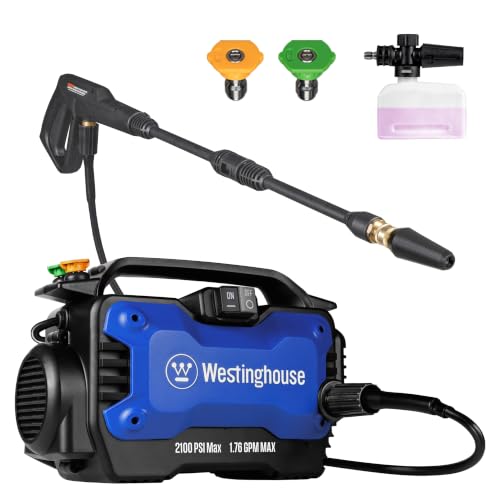

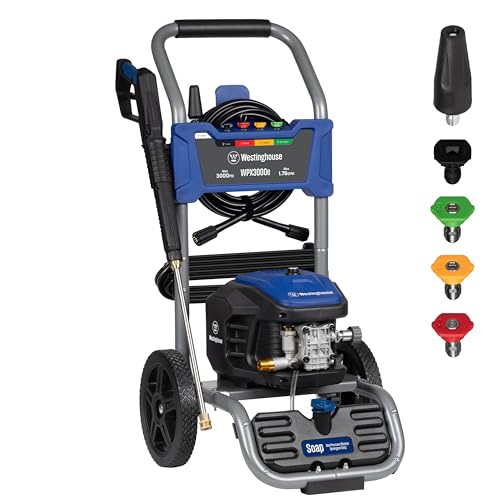

As an Amazon Associate we earn from qualifying purchases at no extra cost to you.
At-a-glance comparison
| Model | Best for | Stated specs | Limits |
|---|---|---|---|
| Sun Joe SPX3000 | General household cleaning, most popular value pick | The maker’s page lists 2030 PSI and 1.2 GPM rated, a 20 ft hose, a 35 ft cord with GFCI, five quick-connect nozzles and a two-year warranty | Listings differ: some show a 1.76 GPM maximum flow and a 13 or 14.5 amp motor, and one review measured about 1450 PSI under load, below the headline figure |
| Sun Joe SPX3000-MAX | Buyers who want a higher pressure rating | Sun Joe sells several SPX3000 variants with higher PSI ratings (listings differ, roughly 2200 to 2700 PSI) and about 1.1 GPM flow | Higher PSI but lower flow than the standard SPX3000, so cleaning speed may not improve; confirm the exact variant |
| Greenworks GPW2003 | Build quality and longer warranty | The maker lists 2000 max PSI at 1.2 GPM, PWMA certified, a 25 ft hose and a 35 ft cord with inline GFCI | Motor amperage (13 or 14) and hose length differ between listings, and Greenworks sells several variants, so confirm the exact model number |
| Craftsman CMEPW1900 | Longer reach on a small machine | Listings give 1900 max PSI, 1.2 GPM, 13 amp, a 35 ft cord and a 25 ft hose (one review says 20 ft) | Modest flow rate, lighter-duty |
| Karcher K1700 | Small spaces, balconies, light cleaning | The maker’s manual lists 1700 PSI and 1.2 GPM with a 20 ft hose; some listings advertise higher maximum figures | Least power in this group |
| Ryobi RY142300 | Step-up electric with a brushless induction motor | Listed at 2300 PSI and 1.2 GPM, 25 ft hose, 35 ft cord, three-year limited warranty | Heavier than the others and likely above the cap at typical retail pricing, so treat it as a stretch option |
How to read pressure washer numbers
PSI is only half the story
PSI tells you how hard the water hits. GPM (gallons per minute) tells you how much water is moving, and together they set how fast a machine cleans. Headline figures on electric units are often maximum ratings. The Sun Joe SPX3000 is a good example: the maker’s page shows 2030 PSI and 1.2 GPM rated, but one review reports a working pressure of about 1450 PSI under load, and some retail listings give 1.76 GPM as a maximum flow. In practice this means any electric washer in this class will clean like a 1,400 to 1,900 PSI machine, which is plenty for cars, grills, garden furniture and fences, but slow on oil-stained concrete.
Motor and power draw
Most machines here use a 13 to 14 amp universal or induction motor. That is close to the limit of a standard household outlet circuit. Plug it directly into a grounded outlet, preferably one with ground-fault protection, and do not share the circuit with other heavy appliances. If you must use an extension cord, use one the machine’s manual says is suitable, as a thin cord can overheat. If you are unsure about your wiring, ask an electrician.
Hose and cord length
The SPX3000 is listed with a 20 ft hose and 35 ft power cord, the Greenworks GPW2003 with a 25 ft hose, and the Craftsman CMEPW1900 with a 25 ft hose in most listings. A short hose means you will move the machine often; a long cord is often more useful than a long hose because you can reposition the unit instead of stretching it. Hose connection types matter too: some buyers report that Sun Joe’s fittings can complicate adding accessories like a foam cannon, so confirm compatibility before buying add-ons.
Nozzles and soap systems
Quick-connect tips (0, 15, 25, 40 degrees and a soap tip) let you adjust the spray. The SPX3000 is listed with five tips and dual soap tanks. A narrow tip concentrates force, so it can etch wood, strip paint or damage soft surfaces. Start with a wider angle and stay further back, especially on decking, siding and vehicles.
Warranty
Warranties in this class run from two years on the Sun Joe SPX3000 to three years on several other models, though terms vary by variant and seller. Pumps on budget electric machines are the usual failure point, so the longer coverage matters more than a few extra PSI.
Decision table
| Pick this if… | Choose | Reason |
|---|---|---|
| You want the most commonly recommended all-rounder | Sun Joe SPX3000 | Widely sold, with a maker-stated two-year warranty |
| You want a longer warranty and sturdier build | Greenworks GPW2003 | Open-frame design with a 25 ft hose; confirm warranty terms for the exact variant |
| You have limited storage space | Karcher K1700 | Compact, with the lowest power in this group |
| You want extra reach from the hose | Craftsman CMEPW1900 | 25 ft hose listed in most sources |
| You want more power and can stretch the budget | Ryobi RY142300 | Listed at 2300 PSI, but likely at or above the cap |
| You need to strip stubborn paint or clean a very large driveway | A heavier-duty gas or premium electric washer | Outside what this tier does well |
Budget tiers within the cap
At the budget end are compact 1,700 PSI electric units suited to bikes, outdoor furniture and car rinsing. The mid-range (still under the cap) has the 1,900 to 2,100 PSI-class models such as the SPX3000, GPW2003 and CMEPW1900, which have the best balance of power, accessories and warranty. At the top of the cap, and sometimes above it, are the more powerful electrics such as the Ryobi RY142300, whose pricing varies by seller. For common home tasks the middle tier is the sweet spot for most buyers.
Safety and care notes
- Never point the jet at people, pets or yourself. High-pressure water can cause serious injury, including cuts that go deeper than they look. Seek medical attention for any injury from the jet.
- Use only the outlet and cord the manual allows, keep connections out of puddles, and do not use the machine in rain. Follow the maker’s ground-fault protection guidance.
- Prime the pump before starting. Run water through the machine and squeeze the trigger until the air clears. Running the pump dry shortens its life.
- Use the right detergent. Only use cleaners the manual approves for the machine’s soap system.
- Winter storage. Drain the pump and hoses before freezing weather, because frozen water can crack pump housings.
- Surfaces. Test on a hidden spot first. Soft wood, painted surfaces, old mortar and windows can be damaged by a narrow tip at close range.
Alternatives to consider
- Garden hose nozzle and a stiff brush. For occasional rinsing of a patio or furniture, a good nozzle may be all you need.
- Battery-powered pressure washers. Handy for cars and small jobs with no cord, but typically weaker and with limited run time.
- Rental or higher-tier gas machine. For big driveways, decks or repeated heavy cleaning, step up to a gas unit or rent one for a weekend.
A note on sourcing: specs come from maker pages and retail listings, and figures differ between sources on flow, amperage, hose length and weight. Confirm the exact variant and what is in the box on the maker’s page before buying.
Short buying checklist
- Decide the heaviest job you expect, such as a car, a fence or a stained patio, and match the machine to that rather than to the biggest number on the box.
- Compare flow (GPM) as well as pressure (PSI), and treat headline figures as maximums.
- Check hose length, cord length and the thread type of the connections if you want to add accessories.
- Look at the warranty term and whether the pump is covered.
- Confirm you have an outdoor outlet with ground-fault protection and enough room to store the machine and hoses.
Frequently Asked Questions
How many PSI do I need for home use?
For cars, patio furniture, siding, grills and fences, 1,300 to 2,000 PSI is usually enough. Electric machines in this price class cover that range. Heavy concrete stains, paint stripping and large driveways benefit from gas machines with higher flow.
Is the rated PSI the pressure I will actually get?
Not always. Listings often show a maximum figure, and one review reports the SPX3000 delivering about 1450 PSI under load against a 2030 PSI rating. Treat headline numbers as an upper limit and compare flow rate as well.
Can an electric pressure washer clean a deck?
Yes, with a wide-angle tip, a steady distance and movement along the grain. Too much pressure can raise or splinter wood fibres. Test an unseen patch first and keep the tip moving.
Do I need an extension cord?
The SPX3000 listing mentions a 35 ft cord, which covers many jobs. If you need more reach, use only a cord that the manual approves and keep the plug connection dry. If in doubt, ask an electrician.
Can I run it from any outdoor tap?
You need a hose connection with enough flow for the machine’s stated GPM. A weak supply makes the pump work harder and may stall it. Use the supply hose size listed in the manual.
Is a more powerful machine always better?
No. More pressure increases the risk of damaging surfaces and does not help if flow is low. Choose the gentlest setup that gets the job done, and pair it with the correct nozzle.