Key takeaways
- Width of the platform. A wider platform is steadier on soft soil. A narrow one is easier to slide between plants.
- Surface. On uneven ground a kneeler with wide feet is steadier than one with narrow legs. Putting a flat board under it can help on very soft soil.
- Height and mobility. If you are tall or have stiff hips, a taller seat height is easier to rise from. If you find a low seat awkward, a standing alternative such as a long-handled tool may be better.
- Care. Wipe cushions down after use, let them dry, and store the kneeler under cover. Steel frames with powder-coated finishes should be kept dry to avoid rust where the coating chips.
- Safety. Open the frame fully and confirm the locks have engaged before putting weight on it. Do not use a kneeler as a step stool. If kneeling causes pain in the knees, hips or back, stop and speak to a doctor or physiotherapist.
For most gardeners, a folding steel-frame kneeler-and-seat such as the Bosmere N470 is the sensible choice under $150, while a light aluminum-frame kneeler suits people who carry it around a large plot, and a simple foam pad is enough if you only kneel for a few minutes at a time. Every type below sits comfortably inside the cap, so the real decision is about frame weight, seat height, weight capacity and how often you will be getting up and down.
Our top picks


As an Amazon Associate we earn from qualifying purchases at no extra cost to you.
Quick comparison: kneeler types and example models
| Type / example | Best for | Stated specs | Limits |
|---|---|---|---|
| Folding kneeler-and-seat, steel frame: Bosmere N470 | All-round beds and borders, getting up and down with handles | Steel frame with powder-coated finish; listings give a 250 lb capacity (one listing says up to 150 kg); about 23.5 x 10.25 x 19.75 in; foam with water-resistant PVC coating | Listings differ on weight (roughly 6.6 to 8.4 lb), so it is not the lightest to carry |
| Lightweight aluminum-frame kneeler (several brands) | Older gardeners or anyone moving the kneeler often | Listings for aluminum designs commonly quote frame weights of only a few pounds; capacities differ by brand, so read each listing | Often costs more than steel models of similar size; capacity can be lower than heavy-duty steel |
| Heavy-duty steel kneeler-and-seat (wide-handle, 2-in-1 styles from several brands) | Heavier users, long sessions, extra-wide handles | Listings for this style quote higher capacities than the basic folding models; figures differ by brand and listing | Bulkier; seat height varies by model, typically in the mid-teens to high-teens of inches |
| Foam kneeling pad (Fiskars Ultralight Kneeling Cushion and similar) | Quick jobs, planting, weeding on the ground | Retail listings give the Fiskars cushion as about 11 x 18 in; most pads of this type are closed-cell foam | No handles, no seat; you still have to push up from the ground |
| Thin folding cushion | Tool bag backup, light use | Very light and compact | No support at all for standing up |
What matters when choosing a garden kneeler
Handles and the push-up problem
The hardest part of gardening on your knees is usually getting back up. A kneeler with legs that double as handles gives you something solid to push against. This is the feature that separates a folding bench from a foam pad. If you have sore knees, a bad back or limited balance, handles matter more than cushion thickness.
Seat mode
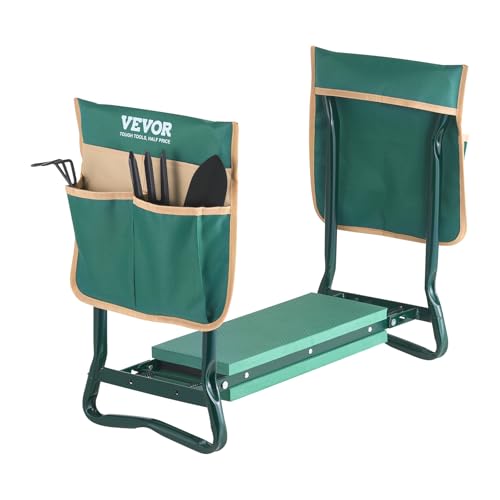
Most folding models flip over: cushion side down gives you a kneeling platform with handles, while turned upside-down they become a low seat. Listings for this style typically describe seat heights in the mid-teens to high-teens of inches. That is low enough for border weeding but may feel too low for someone who struggles to rise from a seat. Check the seat height the maker lists before buying if rising is the problem.
Frame weight and material
Steel frames are stable and handle higher loads, but they weigh several pounds. Heavy steel kneelers weigh several pounds, and the Bosmere N470 listings differ on weight, from roughly 6.6 to 8.4 lb. An aluminum design is usually easier to carry across a big yard or up steps; compare the weight on each listing. If you mainly work in a single bed and leave the kneeler outside the shed door, weight is less important.
Weight capacity
Stated capacities in this category start at about 250 lb for the basic folding models and rise for heavy-duty designs. Treat them as a ceiling, not a target. If you are close to the limit, move up to a heavy-duty steel model with a wide base. Where listings for the same model differ, as with the Bosmere N470 (250 lb in most listings, higher in one), plan around the lower figure.
Foam and covering
Closed-cell foam resists soaking; open foam holds water and turns cold and heavy. The Bosmere N470 is listed with a water-resistant PVC coating on its cushions. Reviewers note that cheaper mats tear and mark easily, so a thicker cover is worth paying a little extra for if you garden on gravel or rough soil.
Folding and storage
A folding frame that locks open is worth having. The N470’s listing describes springs that keep it locked open and a frame that folds flat, which makes it easy to hang in a shed. Also look for a pocket or side tool pouch if you want to keep a trowel within reach, although this adds fiddly parts to a simple product.
Pick-by-need table
| Pick this if… | Choose | Why |
|---|---|---|
| You want one reliable do-it-all kneeler and seat | Bosmere N470-style folding steel kneeler | Steel frame, handles, flips to a seat, folds flat |
| You carry it around a large garden or have limited strength | An aluminum-frame kneeler | Lighter to carry; confirm the stated capacity on the listing |
| You are a heavier user or garden for hours | Heavy-duty steel model with wide handles | Higher stated capacity and a wider platform |
| You only kneel briefly for planting | A closed-cell foam pad | Small and cheap to replace |
| You need a backup in a tool bag | Thin foam cushion | Weighs almost nothing |
| You have a bad back and want one product for kneeling and sitting | A 2-in-1 kneeler-and-seat with handles | One product serves as both a pad and a seat; it is not a medical device |
Budget tiers inside the $150 cap
At the budget end you will find foam pads and simple folding steel frames with thin cushions. These do the job but foam can tear and the frames can feel flimsy when you lean heavily on the handles. In the mid-range sit the established folding kneelers such as the Bosmere N470 and value-oriented 2-in-1 designs. The premium end of this guide covers aluminum-frame and heavy-duty steel models, which cost more because of lighter materials or higher capacities. All of these types fit under the cap, so you do not have to stretch.
Fit, size and comfort notes
- Width of the platform. A wider platform is steadier on soft soil. A narrow one is easier to slide between plants.
- Surface. On uneven ground a kneeler with wide feet is steadier than one with narrow legs. Putting a flat board under it can help on very soft soil.
- Height and mobility. If you are tall or have stiff hips, a taller seat height is easier to rise from. If you find a low seat awkward, a standing alternative such as a long-handled tool may be better.
- Care. Wipe cushions down after use, let them dry, and store the kneeler under cover. Steel frames with powder-coated finishes should be kept dry to avoid rust where the coating chips.
- Safety. Open the frame fully and confirm the locks have engaged before putting weight on it. Do not use a kneeler as a step stool. If kneeling causes pain in the knees, hips or back, stop and speak to a doctor or physiotherapist.
Alternatives to a kneeler
- Rolling garden seat. A wheeled stool with a tool tray suits people who need to sit rather than kneel, and moves along rows without standing up.
- Raised beds or tall planters. Bringing the work up to waist height removes much of the need to kneel at all.
- Long-handled tools. Weeders and cultivators with long handles reduce how often you need to get down on the ground.
A note on sourcing: only the Bosmere N470 had retail-listing specs available for this guide, and those listings differ on weight and capacity. Other styles are described in general terms, so treat any figures as rough guides.
Frequently Asked Questions
Is a kneeler-and-seat better than a foam pad?
For most people, yes, because the handles give leverage for standing up and the frame lifts your weight off your knees. A foam pad is cheaper and lighter, and is plenty for short jobs at ground level. If you notice you dread getting up, step up to a folding model.
How much weight can a garden kneeler hold?
Most listings put the Bosmere N470 at about 250 lb, and heavy-duty steel designs list higher figures. Where sources differ, rely on the lower number. If you are close to the limit, choose a heavy-duty frame instead.
Which is better, a steel or an aluminum frame?
Steel is sturdier and generally cheaper per pound of capacity, but heavier. Aluminum is usually far easier to carry but tends to cost more. Pick by how far you carry it and how much strength you have.
Can I leave a kneeler outside?
It is best not to. UV and constant rain break down foam coverings, and chipped powder coating lets steel rust. Store it in a shed or garage and wipe it dry after use.
Is a kneeler suitable for someone with knee or back problems?
A padded, handled kneeler can make ground-level work more comfortable, and some gardeners like 2-in-1 designs for that reason. It is not a medical product, though. If you have ongoing pain, ask a doctor or physiotherapist what is safe for you.
Do I need a tool pouch on the kneeler?
No. A pouch is handy for a trowel and gloves, but it adds extra stitching and parts that can tear. A separate tool belt or bucket organiser does the same job for most gardeners.