Our Short List of 3
- Best for: Ripping full sheets in a home shop where the saw must roll away after use.
- 10-inch blade
- 15 amp motor, 4800 RPM
- 32-1/2-inch rip capacity
- Foldable rolling table saw stand included

- Best for: Small shops and woodworkers who carry the saw to each job.
- 8-1/4-inch blade
- 15 amp motor, 5800 RPM
- 24-1/2-inch rip capacity
- Rack and pinion telescoping fence rails
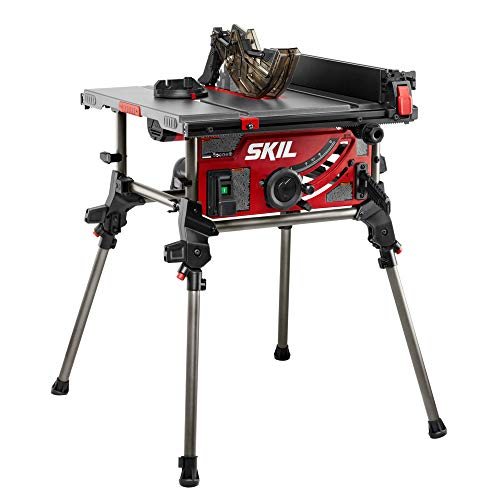
- Best for: Furniture and shelving projects in a shop where the saw must fold away.
- 10-inch blade, 24-tooth carbide blade included
- 15 amp motor, 4600 RPM
- 25-1/2-inch rip capacity
- 4 by 4 cutting capacity at 90 degrees
All 3 Picks at a Glance
| Product | Specs | Action |
|---|---|---|
| DEWALT DWE7491RS |
| Check price on Amazon |
| DEWALT DWE7485 |
| Check price on Amazon |
| SKIL TS6307-00 |
| Check price on Amazon |
Key takeaways
- Three proven table saw models worth hunting for used, plus the fence, motor and safety checks that separate a bargain from a worn-out saw before you buy.
Buying a used table saw is a different decision from buying a new one. The model still matters, because rip capacity, fence design and motor size are fixed at the factory, but the condition of the individual saw in front of you matters just as much. A well kept jobsite saw can serve a home shop for years, while a neglected one can need new parts before it cuts straight. Knowing which models hold up, and which wear points to inspect, turns a risky secondhand purchase into a sound one.
This guide is for home woodworkers and first-time shop owners who want a capable saw without paying for a brand new machine. It covers three jobsite models that appear often on the secondhand market, with specifications from their Amazon listings so you can compare a used example against the factory specification. Amazon sells these saws new, so use the listings as a reference, then judge the used saw in front of you on condition, completeness and cut quality.
Quick Picks
As an Amazon Associate we earn from qualifying purchases
| Product | Best for | Key spec from title |
|---|---|---|
| DEWALT DWE7491RS | Wide rips with a rolling stand | 10-inch blade, 32-1/2-inch rip capacity |
| DEWALT DWE7485 | Small shops and tight storage | 8-1/4-inch blade, 24-1/2-inch rip capacity |
| SKIL TS6307-00 | A full-size saw with a folding stand | 10-inch blade, 25-1/2-inch rip capacity |
How to Choose
Check the fence before anything else
The fence decides whether a used table saw cuts straight or fights you on every rip. Slide it along the rails and lock it at several widths, then measure from the blade to the fence at the front and the back of the blade. The two measurements should match, and the fence should lock firmly without rocking. On a rack and pinion fence, turn the adjustment knob through its full travel and feel for grinding, skipping or dead spots, which point to worn gears or bent rails. A fence that drifts or flexes under hand pressure will waste lumber and patience, and a replacement fence can cost a large share of what a used saw saves you.
Run the motor and spin the blade by hand
Ask the seller to run the saw before you pay, and listen for the sounds that warn of trouble. The motor should start smoothly and reach full speed without groaning, hesitation or a smell of burning. Switch it off and spin the blade by hand once it stops: it should turn freely, without grinding or catching, and there should be no side to side wobble at the arbor. Check that the blade raises, lowers and tilts smoothly through its full range, and that the bevel stops feel positive. A motor that labours under a light cut, or a blade that wobbles, points to bearings or an arbor that will need work soon.
Match rip capacity to the sheet goods you cut
Rip capacity is the widest cut you can make between the blade and the fence, and it decides whether you can break down sheet goods on the saw or must reach for a circular saw first. If you work mostly with full sheets of plywood, look for a saw with at least 24 inches of rip capacity so you can cut a sheet in half. Furniture makers cutting narrower boards can manage with less, but a short rip capacity becomes an annoyance once you start building cabinets or shelving. Check the fence rails for bends and missing extension pieces, because a used saw often arrives without the outfeed support or rail extension that gave it its full capacity when new.
Count the safety gear and the missing parts
A used table saw is only a bargain if everything you need comes with it. Check for the blade guard, riving knife, anti-kickback pawls, miter gauge and push stick, and confirm the guard adjusts without tools catching or binding. Missing safety parts are not a minor detail: replacements can be hard to find for older models, and running a saw without a riving knife raises the risk of kickback. Look at the table surface too. Light surface rust can be cleaned, but deep pitting near the blade or a warped cast top will spoil accuracy. Finally, check the power cord and switch for damage, and confirm the saw includes the wrenches and throat plate it shipped with.
The 3 Best Options
DEWALT DWE7491RS
- Best for: Ripping full sheets in a home shop where the saw must roll away after use.
- 10-inch blade
- 15 amp motor, 4800 RPM
- 32-1/2-inch rip capacity
- Foldable rolling table saw stand included
Ripping full sheets in a home shop where the saw must roll away after use.
Worn stand wheels, bent fence rails and a fence that no longer locks square.
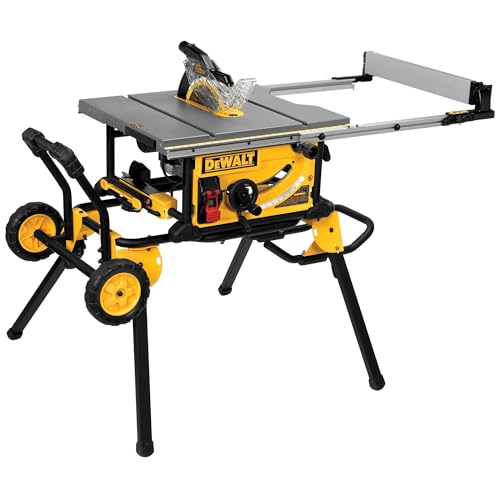
The DWE7491RS is the saw to look for if you want the widest rip capacity in a portable package. Its 10-inch blade and 32-1/2-inch rip capacity handle full sheets of plywood, and the rolling stand folds for transport and storage, which is why this model turns up so often on the secondhand market. The rack and pinion fence adjusts smoothly and stays parallel to the blade, a trait that matters more on a used saw than any other feature. When you inspect one, check the stand wheels, the folding mechanism and the fence rails, since those parts take the most abuse in transit.
Watch out for: Worn stand wheels, bent fence rails and a fence that no longer locks square.
DEWALT DWE7485
- Best for: Small shops and woodworkers who carry the saw to each job.
- 8-1/4-inch blade
- 15 amp motor, 5800 RPM
- 24-1/2-inch rip capacity
- Rack and pinion telescoping fence rails
Small shops and woodworkers who carry the saw to each job.
A missing guard or fence, and a blade that wobbles from a worn arbor.
The DWE7485 is the compact pick, built around an 8-1/4-inch blade that keeps the saw small enough to carry with one hand and store on a shelf. It still offers 24-1/2 inches of rip capacity, enough to cut a sheet of plywood in half, and the rack and pinion telescoping fence rails keep adjustments fast and accurate. Its 54 pound body suits woodworkers who move the saw between a garage, a jobsite and a storage shelf. When you inspect a used one, confirm the modular guard system, riving knife and fence are all present, because this saw is often sold without them.
Watch out for: A missing guard or fence, and a blade that wobbles from a worn arbor.
SKIL TS6307-00
- Best for: Furniture and shelving projects in a shop where the saw must fold away.
- 10-inch blade, 24-tooth carbide blade included
- 15 amp motor, 4600 RPM
- 25-1/2-inch rip capacity
- 4 by 4 cutting capacity at 90 degrees
Furniture and shelving projects in a shop where the saw must fold away.
Loose folding legs, a sticky bevel lock and a missing miter gauge.
The TS6307-00 gives you a full 10-inch blade and an integrated folding stand in a package that folds flat against a wall. Its 25-1/2-inch rip capacity covers most furniture parts, drawer boxes and shelving, and the 4 by 4 cutting capacity at 90 degrees handles thick posts and legs that smaller saws cannot. The rack and pinion fence rails keep the fence parallel to the blade, and the bevel capacity runs from 2 to 47 degrees with stops at 0 and 45 degrees. On a used example, test the folding legs, the blade alignment micro-adjustment and the bevel lock before you commit.
Watch out for: Loose folding legs, a sticky bevel lock and a missing miter gauge.
Which One Fits Your Situation
You rip full sheets in a small garage
Choose the DEWALT DWE7491RS. Its 32-1/2-inch rip capacity cuts a full sheet in half without a second setup, and the rolling stand lets you wheel it out for a cut and fold it away after. Check the fence rails and stand wheels on a used one, since a bent rail or a seized wheel takes away the very mobility that makes this saw worth owning.
You carry the saw to every job
Choose the DEWALT DWE7485. At 54 pounds with an 8-1/4-inch blade, it is the easiest saw here to load into a vehicle and set on a bench, and its 24-1/2-inch rip capacity still handles sheet goods. Make sure the used example includes the modular guard system and the fence, and confirm the saw sits flat without rocking on its roll cage base.
You want a full-size saw that folds away
Choose the SKIL TS6307-00. Its 10-inch blade, 25-1/2-inch rip capacity and integrated folding stand cover furniture, shelving and trim work, then fold flat for storage against a wall. Test the folding legs and the fence on a used one, and look for the miter gauge, push stick and blade guard, which are the parts most often separated from the saw.
You are setting up your first home shop
Choose the SKIL TS6307-00 if floor space is tight, or the DEWALT DWE7485 if you will move the saw often. Both cover the rip capacity a beginner needs for shelving, small cabinets and trim, and both are common enough used that spare parts and replacement blades are easy to find. Spend the saving on a good blade and a push stick, and check the guard and riving knife before your first cut.
Common Mistakes
- Buying the saw without running it first: a motor that groans or a blade that wobbles signals bearings or an arbor that will need work.
- Accepting a saw without its guard, riving knife or miter gauge, then finding replacements are hard to source for that model.
- Judging a saw by its table shine: light surface rust cleans off, but a fence that will not lock square ruins every cut.
- Choosing the smallest rip capacity to save space, then struggling to break down sheet goods for cabinets and shelving.
- Skipping the bevel and blade height controls during inspection, only to find they bind or slip on the first project.
Frequently Asked Questions
Is it safe to buy a used table saw?
Yes, if you inspect it properly. Run the saw, check the fence locks square, spin the blade by hand to feel for wobble, and confirm the guard, riving knife and anti-kickback pawls are present. Walk away from any saw with a damaged cord, a cracked table or a motor that smells of burning, since those faults are expensive to fix.
What should I check first on a used table saw?
Start with the fence, then the motor. Lock the fence at several widths and measure from the blade to the fence at the front and back: the numbers should match. Run the motor and listen for groaning or hesitation, then check the blade raises, lowers and tilts smoothly. Finally, count the guard, riving knife, miter gauge and push stick.
Which used table saw holds its value best?
Jobsite saws from DEWALT and SKIL with rolling or folding stands tend to hold up well on the secondhand market, because their parts are widely available and their fences and motors are well understood. Condition matters more than brand, though: a clean, complete saw with a straight fence will always find a buyer faster than a rough example of a better known model.
Should I buy new if the used saving is small?
If a used saw is missing parts, needs a new blade or has a fence that will not lock square, the saving can disappear fast. In that case a new saw with a full set of safety gear and a warranty is the better choice. Buy used when the saw is complete, runs smoothly and the fence holds its setting, not simply because the tag is lower.