Our Short List of 3

- Best for: installers cutting baseboard, casing and flooring transitions at repeated detent angles.
- Blade diameter: 10 inches
- Motor: 15 amp
- Type: single bevel compound miter saw
- Miter detent plate: stainless steel with 14 positive stops
- Best for: mobile remodelers and first-time owners who want a light 10-inch saw for framing and trim.
- Blade diameter: 10 inches
- Motor: 15 amp
- Blade included: 10-inch 24T TCT blade
- Bevel range: single bevel, 0 to 45 degrees to the left

- Best for: finish carpenters and small shops cutting narrow trim with a steady, simple fixed head.
- Blade diameter: 10 inches
- Motor: 15 amp direct drive
- No-load speed: 4,600 RPM
- Miter cuts: 0 to 45 degrees left and 0 to 52 degrees right
All 4 Picks at a Glance
| Product | Specs | Action |
|---|---|---|
| DEWALT Miter Saw, Single Bevel, Compound, 10-Inch, 15-Amp (DWS713) |
| Check price on Amazon |
| Metabo HPT 10-Inch Compound Miter Saw, 15-Amp, with 24T TCT Blade (C10FCGS) |
| Check price on Amazon |
| Makita LS1040 10-Inch Compound Miter Saw |
| Check price on Amazon |
 SKIL 10-Inch Dual Bevel Sliding Compound Miter Saw (MS6305-00) |
| Check price on Amazon |
Key takeaways
- Four 10-inch chop saws and miter saws compared by blade size, bevel type, miter range and crosscut capacity, for trim, framing and workshop crosscutting.
The real decision behind a 10-inch chop saw is not raw cutting speed. It is whether the saw fits the stock you actually crosscut: trim boards, two-by framing lumber, shelving and stair parts that need a clean square end or a repeatable angle, cut after cut, without swapping to a bigger machine. A 10-inch blade keeps the saw compact and the blade choice simple, yet the designs below differ sharply in bevel direction, sliding travel and how much board width each one can finish in a single pass.
This guide is for trim carpenters who live on miters, remodelers cutting framing lumber on site, and home workshop owners who want one bench saw for crosscuts rather than a large 12-inch station. Every model here was picked from its name and specifications on its Amazon product page, and every model carries a 10-inch blade exactly as listed, because that blade size is the whole point of this keyword.
Quick Picks
As an Amazon Associate we earn from qualifying purchases
| Product | Best for | Key spec from title |
|---|---|---|
| DEWALT Miter Saw, Single Bevel, Compound, 10-Inch, 15-Amp (DWS713) | Trim crews who repeat the same detent angles all day | 10-inch blade, 15-amp motor |
| Metabo HPT 10-Inch Compound Miter Saw (C10FCGS) | A light saw that moves between rooms and jobs | 10-inch blade, 24T TCT blade included |
| Makita LS1040 10-Inch Compound Miter Saw | Finish work where a steady pivoting arm matters | 10-inch blade, direct drive motor |
| SKIL 10-Inch Dual Bevel Sliding Compound Miter Saw (MS6305-00) | Wide boards that a fixed head cannot finish | 10-inch blade, dual bevel sliding design |
How to Choose
Begin with crosscut width, not blade diameter alone
Two saws can share a 10-inch blade and still finish very different boards. A fixed-head compound saw lowers the blade straight into the stock, so its width limit is set by how much blade reaches across the fence line. A sliding model pulls the head toward you and pushes through, extending that reach to wider shelving and framing lumber. Measure the widest board in your usual work first. If most cuts are trim and two-by-six stock, a fixed head is simpler and easier to keep square. If two-by-twelve boards appear often, sliding travel stops being a luxury.
Decide whether one bevel direction is enough
A single bevel saw tilts the blade one way, usually to the left. Cutting the opposite bevel means flipping the workpiece end for end, which is routine on short trim but awkward on a long crown length or a board with a finished face that must stay up. A dual bevel saw tilts both ways, so the stock stays put and only the head changes. Think about your longest typical piece. Short stock forgives a single bevel design. Long, fragile or prefinished pieces reward dual bevel every time the angle reverses.
Read the miter range and the detent stops together
Miter range tells you how far the table turns, while detents tell you how reliably it lands on the angles you use daily. A range reaching past forty-five degrees in one or both directions helps with odd corners that are never truly square, and with returns on trim. Positive stops at the common settings let you swing, click and cut without reading the scale each time. Check both numbers on the listing. A wide range with few stops suits custom angles, whereas a narrower range with many firm stops suits repetitive production cutting.
Match weight and footprint to where the saw will live
A 10-inch saw can be a permanent bench fixture or a tool that rides in a truck and gets carried through a house. Lighter fixed-head models suit installers who set up in a different room each morning and pack out at night. Heavier sliding models earn their keep on a stand or bench where their extra travel stays aligned and supported. Also picture the space behind the saw: sliding rails need clearance at the back, while a glide or fixed design can sit closer to a wall. Measure the bench before the saw arrives, not after.
The 4 Best Options
DEWALT Miter Saw, Single Bevel, Compound, 10-Inch, 15-Amp (DWS713)
- Best for: installers cutting baseboard, casing and flooring transitions at repeated detent angles.
- Blade diameter: 10 inches
- Motor: 15 amp
- Type: single bevel compound miter saw
- Miter detent plate: stainless steel with 14 positive stops
installers cutting baseboard, casing and flooring transitions at repeated detent angles.
the bevel goes one way only, so confirm you are comfortable flipping stock for opposite bevels, and check the current listing for exactly which blade ships in the box.
This DEWALT suits trim and flooring installers who cut the same handful of angles hundreds of times and want each setting to feel positive and repeatable. The stainless steel miter detent plate is the heart of that appeal, because the stops are what your hand learns. Its tall sliding fence supports taller baseboard and crown stock held against it, and the machined base fence support keeps long pieces registered. Choose it when your work is mostly narrow stock cut at standard angles, and when a fixed head that stays simple matters more than sliding reach.
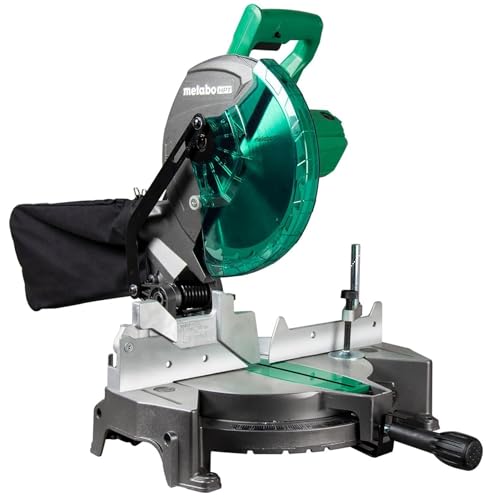
Metabo HPT 10-Inch Compound Miter Saw, 15-Amp, with 24T TCT Blade (C10FCGS)
- Best for: mobile remodelers and first-time owners who want a light 10-inch saw for framing and trim.
- Blade diameter: 10 inches
- Motor: 15 amp
- Blade included: 10-inch 24T TCT blade
- Bevel range: single bevel, 0 to 45 degrees to the left
mobile remodelers and first-time owners who want a light 10-inch saw for framing and trim.
the included 24-tooth blade is a general cutting blade, so check the listing and plan on whether your finish work needs a finer blade than the one supplied.
Portability drives this Metabo HPT design. It is the carry-in option for remodelers who set up on a driveway, a porch or a spare-room floor, cut a pile of framing and trim to length, then move on. The listing stresses a lightweight build and a large table for its class, a pairing that helps short stock sit flat without a full stand. Thumb-actuated positive stops speed up angle changes when you are alternating between square cuts and forty-five degree miters. Pick it when the saw travels more often than it stays.
Makita LS1040 10-Inch Compound Miter Saw
- Best for: finish carpenters and small shops cutting narrow trim with a steady, simple fixed head.
- Blade diameter: 10 inches
- Motor: 15 amp direct drive
- No-load speed: 4,600 RPM
- Miter cuts: 0 to 45 degrees left and 0 to 52 degrees right
finish carpenters and small shops cutting narrow trim with a steady, simple fixed head.
there is no sliding travel, so measure your widest regular board against its fixed crosscut capacity before ordering, and confirm the included blade tooth count on the listing.
Makita built the LS1040 around a dual post compound pivoting arm, and that structure is why finish carpenters keep choosing this older, simpler layout. Two posts guide the head down with less side flex than a single post, which shows up as cleaner entry and exit on delicate trim faces. The direct drive motor removes a belt from the maintenance list, and the machined aluminum base gives the saw a flat, stable reference. It fits a small permanent bench where accuracy on narrow stock matters more than maximum width.
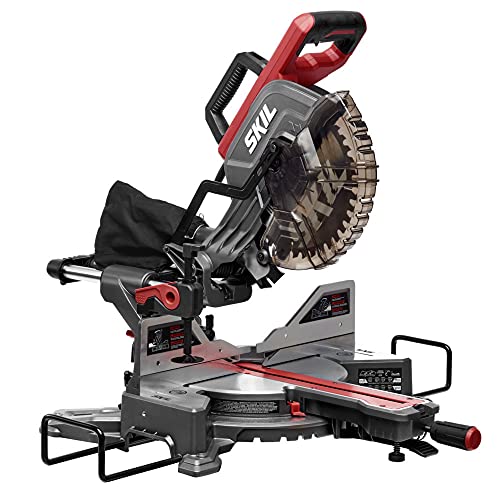
SKIL 10-Inch Dual Bevel Sliding Compound Miter Saw (MS6305-00)
- Best for: workshop owners cutting wide boards who want dual bevel convenience without moving to a 12-inch saw.
- Blade diameter: 10 inches
- Motor: 15 amp
- No-load speed: 4,800 RPM
- Type: dual bevel sliding compound miter saw
workshop owners cutting wide boards who want dual bevel convenience without moving to a 12-inch saw.
sliding rails need room behind the saw, so check your bench depth and wall clearance, and confirm the stand situation on the listing since a saw of this weight is rarely used on the floor.
The SKIL is the width answer in this group. Its sliding head stretches a 10-inch blade across boards that the fixed-head models above simply cannot finish in one pass, and the dual bevel head tilts either way so wide stock stays clamped in place while the angle changes. An LED shadow line casts the blade profile onto the workpiece, giving you a cut line to align before the blade spins. Reach for it when shelving, stair treads and wide framing lumber are routine, and when the saw will live on a stand rather than travel daily.
Which One Fits Your Situation
You install trim in finished houses
Choose the DEWALT DWS713. Your day is casing, baseboard and returns at the same angles, room after room, and a detent plate with many positive stops is worth more there than sliding travel. The tall sliding fence supports upright trim, and the fixed head keeps the setup compact in a furnished space. The Makita is the alternative if you prefer a dual post arm feel.
You remodel and the saw rides with you
Take the Metabo HPT C10FCGS. A light saw that one person can carry in, set on a flat surface and start cutting framing to length suits renovation work better than a heavier station. Its large table for the class helps short offcuts sit safely. Accept the single bevel and the general purpose blade as the trade for that mobility, and add a finer blade if the job turns to finish work.
You have one small bench in a garage shop
The Makita LS1040 belongs on that bench. It asks for no rear rail clearance, its machined base sits flat, and the dual post arm rewards careful trim and furniture crosscuts. Your limit is board width, so keep a handsaw or another method for the occasional very wide panel. For a compact permanent station, that limit is a fair exchange for simplicity and a small footprint.
You cut shelving and wide lumber every week
Buy the SKIL MS6305-00 and give it a stand. Sliding travel is the only way a 10-inch blade finishes a two-by-twelve in one pass, and dual bevel tilts spare you flipping long boards. Plan the space behind it for the rails, and plan to move it rarely. In this situation the extra weight is not a flaw; it is the cost of the capacity you came for.
Common Mistakes
- Reading the keyword as a count of ten saws instead of a 10-inch blade size, then comparing models with mixed blade diameters.
- Buying a fixed-head saw for wide shelving without checking its crosscut capacity against the widest board in the project list.
- Ignoring bevel direction until the first long crown piece has to be flipped end for end on a single bevel saw.
- Setting a sliding saw against a wall with no clearance for the rails to travel through their full stroke.
- Keeping the coarse blade that ships in the box for fine trim, instead of matching tooth count to the finish the work needs.
- Skipping a test cut on scrap after unboxing, before trusting the detents and the fence on real material.
Frequently Asked Questions
Is a chop saw the same thing as a miter saw?
In woodworking listings the two names overlap heavily. Chop saw describes the downward cutting action, while miter saw describes the angled cuts the table allows, and most 10-inch models sold for wood are compound miter saws that do both jobs. Always read the individual listing rather than trusting the label, because industrial chop saws for metal are a different tool entirely.
Why choose a 10-inch blade over a 12-inch blade?
A 10-inch saw is smaller, lighter and easier to store, and its blades are a common size shared with many table saws. The trade is capacity: it cuts less depth and, in fixed-head form, less width than a 12-inch model. For trim, framing lumber and most shelving, that capacity covers the work. For tall crown or very thick stock, the larger blade earns its space.
Can a 10-inch chop saw cut a two-by-twelve?
Only a sliding model can do it in one pass, because the head travels across the board instead of relying on blade reach alone. In this guide the SKIL lists that exact capacity at ninety degrees. A fixed-head 10-inch saw will run out of width partway across. Check the capacity line on any listing against your board before assuming a saw can finish the cut.
Do I need dual bevel for trim work?
Not for most of it. Baseboard and casing are usually cut with miters, and a single bevel saw handles the bevels that do appear by flipping the piece. Dual bevel pays off on long, wide or prefinished stock that is hard to flip without damage or losing your reference face. Match the feature to the longest piece you cut, not the average one.