Key takeaways
- Five resin SLA printers for short-run components, compared on build volume, XY detail, stated print speed, heated vats and batch-friendly plates.
Short-run component work changes the buying question. A hobby machine only has to finish one good-looking model; a production bench has to turn out the same bracket, housing or jig twenty times in a row, with the tenth part matching the first. That makes plate area, repeatable detail and vat temperature control worth more than a headline resolution figure on its own.


This guide is for small workshops, product teams and service bureaus printing functional parts in small batches, often against repeat orders from the same customers. Every machine below is a resin printer of the SLA/MSLA family, and each pick was chosen from the figures and features printed on its Amazon listing: build volume, screen size, XY detail, stated speed, heating and resin-handling features.
Quick Picks
As an Amazon Associate we earn from qualifying purchases.
| Product | Best for | Key spec |
|---|---|---|
| ELEGOO Saturn 4 Ultra 16K | Fine features on small functional parts | 10-inch 16K mono LCD, tilt release up to 150 mm/h |
| ANYCUBIC Photon Mono M7 Pro | Fast repeat batches of small components | 10.1-inch 14K LCD, up to 170 mm/h with high-speed resin |
| ANYCUBIC Photon Mono M7 Max | Large housings printed in a single piece | 13.6-inch 7K LCD, 298 x 164 x 300 mm build volume |
| UniFormation GK3 Ultra | Long runs in an unheated workshop | 13.5-inch 16K LCD, heating rated for a 0°C room |
| phrozen Sonic Mega 8K S | Full plates of identical small parts | 15-inch mono LCD, 330 x 185 mm build plate |
How to Choose
Build Volume and Plate Layout for Batches
Short runs are won or lost on the plate. A taller Z axis helps single large parts, but batch output depends on the flat area: how many components fit side by side in one exposure run. A plate around 220 x 125 mm holds a useful grid of small brackets or enclosures, while a 330 mm wide plate can multiply that count several times over. Measure your largest recurring part, add room for supports and spacing, then pick the smallest machine that fits it with space to spare.
XY Resolution Against Screen Size
The K number on a screen means little without the pixel size behind it. A 16K panel stretched across a 13.5-inch screen lands near 20 x 26 µm pixels, while a 10-inch 16K panel reaches 14 x 19 µm. For functional components, pixel size decides how cleanly small holes, snap fits and embossed markings form. Match the figure to your tightest feature: parts with 0.3 mm holes or fine gear teeth need the smaller pixel pitch, while big housings tolerate a coarser grid.
Print Speed and Release Technology
Stated speed figures only hold under the conditions named in the listing. Tilt-release machines peel each layer by tilting the vat, which cuts peel force and supports the headline speeds of up to 150 mm/h. Other models quote their top figure only with a matched high-speed resin at a thick 0.1 mm layer, dropping to a lower number on standard resin. For short runs, consistency matters more than the peak: a slightly slower machine that finishes every plate beats a fast one that fails mid-batch.
Vat Heating, Feeding and Uptime Features
Resin thickens as the room cools, and thick resin is a common cause of failed layers and parts that drift out of tolerance. Heated tanks holding resin near 30°C, and chambers rated to print in rooms near 0°C, keep viscosity steady across a long run. Automatic resin feeding matters on big plates, where a single batch can drain a small vat. Add the monitoring extras listings name, such as cameras and residue detection, and you get fewer ruined plates per week.
The 5 Best Options
ELEGOO Saturn 4 Ultra 16K
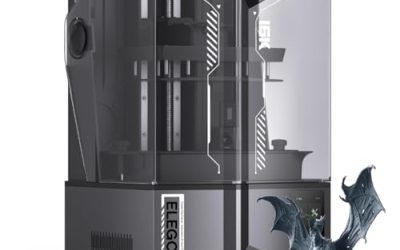
This is the detail pick for workshops whose short runs involve small, feature-dense components: connector housings, gear blanks, clips with thin walls. Its listing pairs a 10-inch 16K mono LCD with 14 x 19 µm pixels, the finest pitch in this group, so small holes and sharp edges form cleanly across the plate. Tilt release supports print speeds up to 150 mm/h, and the smart tank heating holds resin at 30°C, which keeps exposure behaviour steady when the workshop cools overnight. The AI camera and flip-up lid suit benches that run unattended batches.
Specs
- 10-inch 16K mono LCD screen
- XY resolution of 14 x 19 µm
- Build volume of 211.68 x 118.37 x 220 mm
- Tilt release technology, up to 150 mm/h
- Smart resin tank heating at 30°C
- AI camera with light for monitoring
- Built-in Wi-Fi with cluster printing support
- Net weight 16.1 kg
Best for: Small functional parts where fine features and clean holes decide whether the part works.
Watch out for: The build plate is the second smallest here, so confirm your batch layout fits 211 mm of width before ordering.
ASIN: B0DT8PV51T — View on Amazon
ANYCUBIC Photon Mono M7 Pro
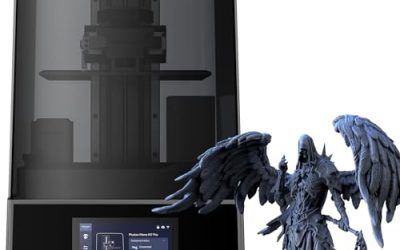
Turnaround is the argument for this machine. The listing quotes up to 170 mm/h with high-speed resin at a 0.1 mm layer, and 130 mm/h on standard resin, which shortens the gap between a design tweak and a fresh set of parts. Its 10.1-inch 14K screen spreads 13312 x 5120 pixels over a 223 x 126 mm plate, fine enough for detailed components, and the COB LighTurbo 3.0 light source is built for even exposure across that plate. Dynamic resin heating and automatic filling support longer batch runs without the vat running dry or cooling down.
Specs
- 10.1-inch 14K mono LCD, 13312 x 5120 pixels
- COB LighTurbo 3.0 light source
- Up to 170 mm/h with high-speed resin, 130 mm/h standard
- Build volume of 223 x 126 x 230 mm
- Dynamic temperature control for the resin vat
- Automatic resin filling during prints
- Leveling-free setup per the listing
Best for: Teams refining prototypes and small components against a deadline, where hours per batch matter.
Watch out for: The headline speed needs the matched high-speed resin named in the listing; budget for that resin rather than assuming your current stock hits the same figure.
ASIN: B0CYSBZX61 — View on Amazon
ANYCUBIC Photon Mono M7 Max
Some components simply do not fit a 10-inch plate: long enclosures, ducting, manifold blocks, full-width brackets. This listing answers with a 13.6-inch 7K screen and a 298 x 164 x 300 mm build volume, so parts that would need splitting and gluing on a smaller machine print in one piece. The trade is pixel size, which grows with the screen, so edges are less fine than on the smaller 14K and 16K machines. COB LighTurbo 3.0 lighting, dynamic vat heating and a flip-open cover round out a package aimed at steady, larger-format output.
Specs
- 13.6-inch 7K mono LCD screen
- Build volume of 298 x 164 x 300 mm
- COB LighTurbo 3.0 light source
- Dynamic heating with temperature control
- Flip-open cover design
- Maximum print speed of 60 mm/h per the listing comparison
- Sold as a large-format resin printer for bigger parts
Best for: Workshops whose short runs include parts too long or too tall for a mid-size plate.
Watch out for: Check the pixel size against your smallest feature; the big screen trades fine detail for area, and the machine needs a deep, sturdy bench.
ASIN: B0DB8BF7R3 — View on Amazon
UniFormation GK3 Ultra
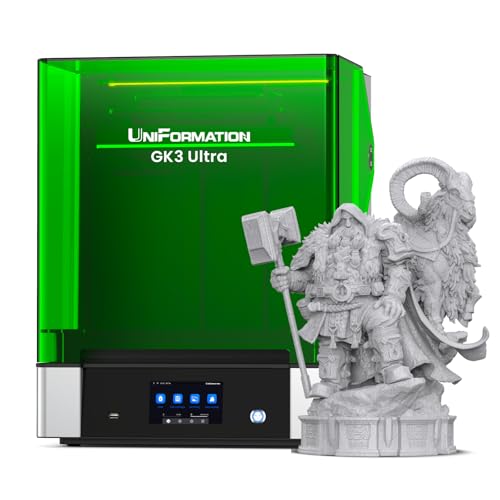
Cold rooms quietly ruin batch consistency, and this machine is built around that problem. Its listing describes a smart heating system rated to keep printing when the outside temperature is 0°C, plus an automatic resin feeder that refills the vat during large prints, so a long plate of components does not stall on an empty tank. The 13.5-inch 16K screen covers a 300 x 160 x 300 mm build volume at 20 x 26 µm pixels, a useful middle ground between the very large 7K machine above and the finer 10-inch models. A built-in carbon filter is also named in the listing.
Specs
- 13.5-inch 16K LCD, 15120 x 6230 pixels
- XY resolution of 20 x 26 µm
- Build volume of 300 x 160 x 300 mm
- Smart heating system rated for 0°C outside temperature
- Automatic resin feeder for long prints
- Built-in carbon filter
- Layer thickness options of 30 µm or 50 µm
Best for: Garages and unheated workshops running long batches through winter without failed plates.
Watch out for: The listing does not name auto-leveling, so expect a manual setup routine, and confirm the footprint fits your bench before ordering.
ASIN: B0F66KVMTQ — View on Amazon
phrozen Sonic Mega 8K S

When a short run means fifty or a hundred copies of the same small component, plate width is the whole game. This listing is built around a 15-inch mono LCD and a 330 x 185 mm plate, and it rates the machine at 80 detailed 1/32 scale models in under 1.5 hours with the named ACF film and resin pairing. The 43 µm pixel size is the coarsest here, which is the honest trade: this machine wins on copies per run, not on the finest single-part detail. The lift-up lid and generous 300 mm Z height also suit taller parts nested between batches.
Specs
- 15-inch mono LCD screen
- XY resolution of 43 µm
- Build volume of 330 x 185 x 300 mm
- Model number MEGA8KS000US per the listing
- Batch figure of 80 models in under 1.5 hours stated by the maker
- ACF release film named in the listing
- Lift-up lid design
- Weight of 57.3 lb per the listing roundups
Best for: Sellers and bureaus printing full plates of identical small parts on a repeating schedule.
Watch out for: The 43 µm pixels will not resolve the finest features; check your smallest wall or hole against that figure, and plan for a two-person lift at setup.
ASIN: B0CF24PTPD — View on Amazon
Which One Fits Your Situation
You Print Small Precision Parts in Repeat Batches
Choose between the Saturn 4 Ultra 16K and the Photon Mono M7 Pro. The ELEGOO’s 14 x 19 µm pixels give the cleanest small features, while the ANYCUBIC’s higher stated speed and auto-fill vat shorten each cycle. If your parts carry tiny holes or thin snap features, take the finer screen; if the same parts repeat daily, take the faster machine.
Your Parts Are Too Big for a Standard Plate
Look at the Photon Mono M7 Max first for its 298 mm length, or the GK3 Ultra if you also want heating and auto feeding on a 300 mm plate. Both print housings and fixtures in one piece that smaller machines would force you to split. Accept the coarser pixel size as the trade for the area, and design wall thicknesses with that figure in mind.
Your Workshop Is Cold for Half the Year
The GK3 Ultra is the direct answer, with heating rated for a 0°C room and a feeder that keeps long prints supplied. The Saturn 4 Ultra 16K and the M7 Pro are the fallbacks, since both heat their resin to hold viscosity steady. Whichever you choose, heated resin handling is not optional for consistent winter batches; it is the feature that protects your tolerances.
You Sell the Same Parts Again and Again
The Sonic Mega 8K S earns its bench space here: the widest plate in this group and a stated batch figure aimed squarely at volume. Pair it with the M7 Pro if you also need a faster, finer machine for the detailed end of your catalogue. Two specialised machines usually beat one compromise when the same orders repeat every week.
Common Mistakes
- Judging a screen by its K number alone, without checking the pixel size in µm against the smallest feature on your parts.
- Believing the headline print speed applies to every resin, when listings tie top figures to a named high-speed resin and a thick layer setting.
- Filling a batch plate edge to edge with no spacing, which raises peel force and invites failed parts across the whole run.
- Ignoring room temperature: unheated resin in a cold workshop thickens, and exposure settings that worked in summer begin failing.
- Forgetting the wash and cure side of the workflow, so finished components wait in a queue while the printer sits idle.
Frequently Asked Questions
Is a resin printer a good choice for functional components?
Yes, provided the parts suit the material. Resin machines hold fine features, smooth surfaces and tight holes well, which suits enclosures, clips, jigs and housings. The limits are impact strength and heat resistance compared with some filament materials, so check the resin’s stated properties against the job before committing a whole batch to it.
How many parts can I print in one run?
It depends on the plate and the part footprint. A 223 x 126 mm plate holds a modest grid of small components, while a 330 x 185 mm plate multiplies that count several times. Leave gaps between parts for supports and peel behaviour, and remember that every part in the run shares the same layer time, so full plates are efficient.
Do I need a heated vat for short-run work?
If your room stays warm year-round, you can manage without one. If the workshop cools at night or through winter, heating earns its place: listings for the machines above hold resin near 30°C or rate the printer for rooms at 0°C. Steady viscosity means steadier exposure, fewer failed layers and parts that stay within tolerance across a batch.
What else do I need besides the printer?
Budget bench space and supplies for the full workflow: resin matched to your parts, a wash and cure setup sized to your largest component, spare release film, and ventilation or filtration for the room. None of the printers above includes a separate wash and cure station in the listing, so plan that purchase alongside the machine rather than after it.