Key takeaways
- Compare the 4 best 12-inch sliding compound miter saws for November 2026, with bevel range, slide travel, motors, dust collection and workshop fit covered.
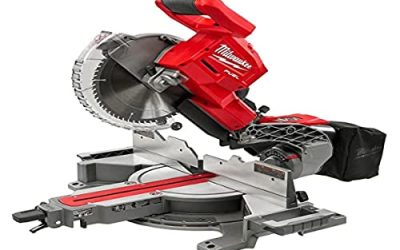
A 12-inch sliding compound miter saw is the tool that decides whether wide boards, tall baseboards and crown moulding come out square or slightly off. The real decision is not the brand on the housing but the combination of crosscut capacity, bevel range and slide smoothness, because a saw that cannot reach across a wide board in one pass forces a flip-and-finish cut that rarely lines up. Buyers also have to weigh weight and footprint against power, since the most capable saws are heavy and need a stand or a permanent bench spot.


This guide serves weekend woodworkers building decks and trim, remodelers cutting baseboards and crown, and small-shop owners who need one saw for framing and finish work. Each pick below is a 12-inch sliding compound miter saw listed on Amazon, and the details come from the product names and specifications shown on those Amazon pages, so you can check every claim against the listing before you order.
Quick Picks
As an Amazon Associate we earn from qualifying purchases.
| Product | Best for | Key spec from title |
|---|---|---|
| DEWALT DWS780 | Accurate crosscuts with a light guide | XPS LED shadow light system |
| Makita LS1219L | Tight workshops and flush-wall setups | 2-steel rail sliding system |
| DEWALT DWS780 with DWX724 Stand | Jobsite work straight out of the box | Includes DWX724 miter saw stand |
| DOVAMAN 12-Inch Dual-Bevel Miter Saw | A simpler dual-bevel sliding option | 12-inch dual-bevel sliding design |
How to Choose
Crosscut capacity and slide travel
Crosscut capacity is the widest board the saw can cut in a single pass, and it is the first number to check on a 12-inch sliding saw. The sliding rails extend the reach well beyond a fixed chop saw, which is the whole point of buying this type, but the actual capacity depends on the rail design and how far the head travels. Measure the widest boards you cut regularly, such as decking, shelving or wide trim, and choose a saw whose listed crosscut capacity clears that width with room to spare. A saw that falls short will force two-pass cuts on your most common boards.
Bevel and miter range
Bevel range decides whether you can cut crown moulding and angled joints without flipping the workpiece. A double-bevel saw tilts both left and right, so you can cut matching angles on both ends of a board without turning it around, while a single-bevel saw only tilts one way. Check the maximum bevel angle in each direction and the miter detents, because common angles such as 45 degrees should lock in positively rather than relying on a scale you have to eyeball. Wide miter range also matters for decking and framing cuts that are not square.
Motor, blade speed and cut quality
A 12-inch sliding saw needs enough motor power to drive a large blade through thick hardwood without bogging down or burning the cut. Look at the amp rating on corded models and the no-load blade speed, since both shape how cleanly the saw moves through dense material. The blade that ships with the saw matters too: a low-tooth-count framing blade leaves a rough edge on trim, while a higher-tooth-count blade gives a cleaner finish but cuts more slowly. Plan on matching the blade to the work, and check whether the saw accepts standard 12-inch blades.
Dust collection, weight and workspace fit
Sliding miter saws throw a large volume of sawdust, and the dust bag included with most saws catches only part of it, so check whether the saw has a dust port that fits a shop vacuum hose. Weight and footprint are the other practical limits: a full-size 12-inch slider is heavy, and rear-sliding rails need clearance behind the saw, while a front-rail or compact-rail design can sit closer to a wall. Measure your bench or stand space before ordering, and decide whether the saw will live in one spot or travel to jobsites.
The 4 Best Options
DEWALT DWS780 12-Inch Double Bevel Sliding Compound Miter Saw
The DEWALT DWS780 is the reference point for this category, a corded 12-inch double-bevel sliding saw built around a 15-amp motor and the XPS LED shadow light system, which projects the blade shadow onto the workpiece so the cut line is visible without adjusting a laser. It handles wide boards and tall baseboards in a single pass, and the double-bevel head tilts both ways for crown and compound angles. The saw ships with a blade wrench, a material clamp and a dust bag, so it is ready to cut once it is mounted.
Specs
- 12-inch double-bevel sliding compound miter saw
- 15-amp motor
- 3,800 RPM no-load speed
- XPS LED shadow light system for cut-line indication
- Includes blade wrench, material clamp and dust bag
Best for: Woodworkers who want a proven full-size slider with a visible cut line for accurate crosscuts.
Watch out for: It is a heavy full-size saw, so plan for a stand or a permanent bench position rather than carrying it by hand.
Makita LS1219L 12-Inch Dual Bevel Sliding Compound Miter Saw with Laser
The Makita LS1219L takes a different approach to the same job, using a two-steel-rail sliding system that keeps the head travel compact so the saw can operate flush against a wall. That matters in a small garage or shared workshop where a conventional rear-sliding saw would need a foot of clearance behind it. It is a 15-amp dual-bevel saw with a laser guide, and the listing describes efficient dust extraction alongside the capacity and accuracy the model is known for, which suits trim and finish work in tight spaces.
Specs
- 12-inch dual-bevel sliding compound miter saw with laser
- 15-amp motor
- Unique 2-steel rail sliding system
- Reduced saw footprint allows operation flush against a wall
- Efficient dust extraction
Best for: Small workshops where the saw must sit close to a wall without losing slide travel.
Watch out for: The compact rail layout and laser add complexity, so confirm the bevel stops and laser alignment on arrival before starting finish work.
DEWALT DWS780 12-Inch Sliding Compound Miter Saw with DWX724 Stand

This listing pairs the same DEWALT DWS780 saw with the DWX724 miter saw stand, which makes it the practical pick for anyone who needs to move the saw between jobsites or set it up away from a workbench. The saw itself is the same 12-inch, 15-amp, double-bevel slider with a 3,800 RPM motor, so the cutting capability matches the standalone DWS780, while the stand gives a stable working height and a place to support long boards. Buying the saw and stand together also removes the guesswork of finding a stand that fits the saw mounting pattern.
Specs
- 12-inch double-bevel sliding compound miter saw
- 15-amp motor
- 3,800 RPM no-load speed
- Corded with sliding compound action
- Includes DWX724 miter saw stand
Best for: Jobsite and mobile work where the saw needs its own stable stand from day one.
Watch out for: The combined saw-and-stand package is bulkier to transport and store than the saw alone, so check your vehicle and storage space.
DOVAMAN 12-Inch Dual-Bevel Miter Saw

The DOVAMAN 12-inch dual-bevel miter saw is the simpler alternative in this roundup, a 12-inch dual-bevel sliding model listed on Amazon for buyers who want the core sliding-compound capability without the pro-brand feature set. It appears in sliding miter saw roundups as a straightforward dual-bevel option, and its listing is the place to confirm the slide travel, bevel stops and included accessories before ordering, since the details on this model are thinner than on the established brands. It suits a buyer who mainly needs wide crosscuts and two-way bevels at a basic level.
Specs
- 12-inch dual-bevel miter saw
- Sliding compound miter saw design
- Dual-bevel head for angled cuts in both directions
Best for: Buyers who want a basic 12-inch dual-bevel sliding saw and will verify the listing details before ordering.
Watch out for: This is the least documented pick here, so confirm slide travel, bevel range and included accessories on the Amazon listing before buying.
Which One Fits Your Situation
Cutting wide boards and decking
Wide boards are where slide travel matters most, because a saw with short rails will leave a wide deck board unfinished in one pass. The DEWALT DWS780 covers this work well with its full-size slide and 15-amp motor, and the XPS shadow light helps keep long crosscuts on the mark. Mount it on a stand with board supports so long pieces stay level through the cut, and use a framing blade for decking rather than a fine finish blade.
Trim, baseboards and crown moulding
Trim work rewards accuracy over raw power, and the cut line has to be exact on every piece. The Makita LS1219L suits this situation because its compact rails fit a small trim station and its laser marks the cut, while the double bevel handles crown angles without flipping the workpiece. The DWS780 is equally capable here if bench space is not a constraint. Either way, fit a higher-tooth-count blade for clean edges on painted trim.
A small garage or shared workshop
When the saw shares a garage with a car, a workbench and storage, footprint decides everything. The Makita LS1219L is the natural fit because its two-steel-rail system lets it sit flush against a wall, reclaiming the clearance a rear-sliding saw would waste. Measure the bench depth before ordering, keep the dust port connected to a vacuum to control the mess, and store the saw pushed back when it is not in use.
Jobsite work and moving the saw often
A saw that travels needs a stand and a setup routine that takes minutes, not half an hour. The DWS780 bundled with the DWX724 stand is the pick for this situation, since the stand is matched to the saw and gives a stable height on uneven ground. Load the saw and stand as a pair, keep the blade guard and clamp with the saw so nothing is left behind, and check the bevel and miter detents after transport before cutting.
Common Mistakes
- Buying a 12-inch saw for wide boards without checking the listed crosscut capacity against the widest board you cut.
- Choosing a single-bevel saw for crown moulding and then flipping every workpiece to cut the matching angle.
- Ignoring dust collection and letting sawdust pile up around a saw that has a dust port for a vacuum hose.
- Using the framing blade that ships with the saw for painted trim and expecting a clean, splinter-free edge.
- Setting a heavy slider on a light folding table that flexes under the saw and throws cuts out of square.
Frequently Asked Questions
What is the difference between a sliding compound miter saw and a chop saw?
A chop saw has a fixed head that drops straight down, so its cut width is limited by the blade diameter. A sliding compound miter saw mounts the head on rails that move forward and back, which extends the crosscut capacity well beyond the blade size, and the head also tilts for bevel cuts. The sliding design is what lets a 12-inch saw cut wide boards in one pass.
Do I need a 12-inch saw, or is 10 inches enough?
A 10-inch sliding saw handles most trim and framing, but a 12-inch saw cuts wider boards and taller baseboards in a single pass, which matters if you regularly cut decking, shelving or wide crown. If your work is mostly narrow trim and you need a lighter saw, 10 inches may be enough, but check the crosscut capacity of each model against your widest boards.
What does double bevel mean on a miter saw?
Double bevel means the saw head tilts both left and right, so you can cut bevels in either direction without turning the workpiece around. This is most useful for crown moulding and compound angles, where matching cuts are needed on both ends of a board. A single-bevel saw tilts one way only, so the second cut requires flipping the board.
Can a 12-inch sliding miter saw cut crown moulding?
Yes, a 12-inch sliding compound saw can cut crown moulding, and the double-bevel models in this guide are well suited to it because they tilt both ways for matching angles. Cut crown nested against the fence or flat on the table depending on the profile, use the miter detents for the standard angles, and test the setup on scrap pieces before cutting the finished lengths.