Key takeaways
- The best panel saws you can actually buy on Amazon US, with honest notes on the small verified pool, crosscut capacity, frame size, and accuracy features.
As an Amazon Associate we earn from qualifying purchases.
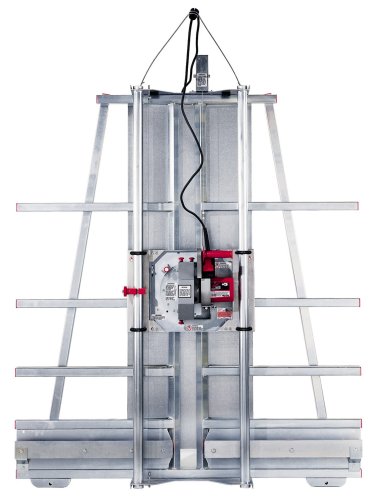
A panel saw exists to solve one problem: breaking down full sheets of plywood, MDF, melamine, and other sheet goods accurately, safely, and without a helper. On a table saw, a 4×8 sheet is an awkward, flexing load that wants to bind, drift, and kick. On a panel saw, the sheet rests flat against a frame while the saw travels through the material on a guided carriage, so the cut line stays where you marked it and the sheet stays under control from start to finish. Cabinet shops, sign makers, and serious home workshops use them for exactly that reason.

One thing needs saying plainly at the start of this guide: the pool of true panel saws sold on Amazon US is small. Most panel saw manufacturers sell through woodworking dealers and industrial suppliers rather than Amazon, and many listings that use the words “panel saw” are actually selling blades, track saw accessories, or ordinary circular saws. Rather than pad this guide with machines that are not panel saws, it covers the genuine panel saws whose Amazon US listings could be verified, explains how to judge any panel saw you are considering, and is honest about where the selection is thin. If your work is mostly sheet goods, a real panel saw is still one of the most satisfying upgrades a shop can make.
Disclosure: This article contains affiliate links. If you buy through these links, we may earn a commission at no additional cost to you.
How to Choose a Panel Saw
Vertical or horizontal layout
Most panel saws sold for small and mid-size shops are vertical: the sheet leans against an upright frame at a slight angle and the saw unit travels up, down, and across on rails. Vertical machines need very little floor space because the footprint is mostly the width of the frame and a modest depth at the base, which is why they suit garages and shared workshops. Horizontal panel saws and beam saws lay the sheet flat and are production machines for larger facilities; they rarely make sense outside a commercial setting. For nearly every reader of this guide, a vertical panel saw is the right format.
Crosscut capacity and frame width
The headline figure is crosscut capacity: the widest cut the saw can make across a sheet. A 50-inch class machine handles the 48-inch width of a standard sheet with room to spare, which covers the great majority of cabinet and furniture work. A 64-inch class machine also handles the long dimension of wider stock and oversized sheets. Rip capacity on a vertical panel saw is effectively the length of the frame, so cutting along an 8-foot sheet is a matter of rotating the saw head ninety degrees and running the cut horizontally. Match the frame to the largest sheets you realistically buy; a wider frame costs more floor width and more money, and it earns nothing if every sheet you own is a standard 4×8.
The saw unit and motor
Panel saws carry a circular saw motor on a moving carriage. Look at the motor’s amp draw and the blade diameter it drives, because thicker and denser sheet goods, such as 1-inch MDF, melamine with a fragile face, and plywood with thick cores, all cut cleaner with a strong motor that does not slow mid-cut. Blade choice matters as much as power: a fine-tooth blade with a grind suited to sheet goods is what prevents chip-out on melamine and veneer faces. Check that the machine’s guarding covers the blade through the cut and that the carriage moves on bearings rather than sliding friction, because carriage smoothness is felt directly in cut quality.
Accuracy features
The features that separate a panel saw from a saw on a stick are the measurement and stop systems. A good machine has a stable material support ledge, rollers or low-friction supports that let you slide a heavy sheet into position without fighting it, a measuring rule you can read at the cut line, and repeat stops or a quick stop gauge for making the same cut many times. Dust extraction ports matter more than buyers expect: sheet goods produce a large volume of fine dust, and a saw that connects to a shop vacuum or dust collector keeps both the cut line and the shop cleaner.
Space, power, and delivery
Measure your wall before ordering. A vertical panel saw needs ceiling height for the frame, wall width for the frame plus working room at each end to load sheets, and a path from the door wide enough to bring the frame in. Most machines in this class run on a standard heavy-duty household or shop circuit, but confirm the requirement on the listing. These are freight items, not parcel items, so plan for how the crate will be unloaded and where it will be unpacked.
The Best Panel Saws
1. Saw Trax 2000 Series 2052 Vertical Panel Saw — the full-size shop choice
Saw Trax builds its panel saws in the United States and the 2000 Series is its full-featured line for shops that cut sheet goods every week. The 2052 is the 52-inch crosscut model in that line, sized for standard 4×8 sheets with working room to spare.
- View on Amazon: https://www.amazon.com/dp/B00DTNNVDI
The 2052 stands the sheet against a welded steel frame and runs the saw carriage on a guided track for both vertical crosscuts and, with the saw unit rotated, horizontal rip cuts along the sheet. That dual-direction cutting is the core convenience of a panel saw: a full sheet can be squared, ripped to width, and crosscut to length without ever leaving the frame, which removes the most dangerous handling step in sheet work. The carriage design keeps the blade path consistent from the top of the sheet to the bottom, so tall crosscuts come out square instead of wandering as a hand-guided saw tends to do. Material supports along the base let a single operator load and position a heavy sheet, and the frame’s folding and stand options in the 2000 Series suit shops that occasionally need to reclaim the wall space.
Saw Trax sells a wide accessory range for this platform, including dust collection kits and measuring systems, so the machine can grow with the shop. Choose the 2052 if sheet goods are a regular part of your work, if you currently wrestle full sheets across a table saw, and if you have the wall space for a permanent frame. It is the most complete verified panel saw package in this guide.
2. Milwaukee 6480-20 Panel Saw — the long-running industrial design
The Milwaukee 6480-20 is one of the longest-produced panel saw designs in North America, a heavy-duty vertical machine built around a 15-amp Milwaukee saw motor, and its design was successful enough that the pattern continued in the industry after Milwaukee’s own production run. It remains listed on Amazon US and is worth considering for shops that want a proven, mechanically simple machine.
- View on Amazon: https://www.amazon.com/dp/B0009H57JS
The 6480-20 carries its saw on a counterbalanced carriage that travels the height of the frame for crosscuts and rotates for rip cuts, with a crosscut capacity in the 50-inch class that covers standard sheet widths. The 15-amp motor drives an 8-1/4-inch blade, a combination chosen for torque through thick sheet stock rather than for speed in thin material, and the all-steel frame and chain-driven carriage are built for daily use rather than occasional hobby work. Cut accuracy comes from the rigidity of the frame and the guided carriage: once the machine is set up square, it repeats that square cut sheet after sheet, which is precisely what cabinet parts demand.
A practical note: this model has been out of Milwaukee’s current production line for some years, with the design carried forward by another maker, so confirm the listing details, condition, and parts support before ordering, and check which stand and accessories are included. Choose the 6480-20 if you value a heavy, simple, time-proven machine and are comfortable verifying the exact listing configuration, or if you already run this pattern of saw and want a matching unit.
Comparison Table
| Model | Type | Crosscut capacity | Motor | Best for |
|---|---|---|---|---|
| Saw Trax 2000 Series 2052 | Vertical panel saw | 52 in | Saw carriage unit on guided track | Weekly sheet-goods work, full 4×8 sheets |
| Milwaukee 6480-20 | Vertical panel saw | 50 in class | 15-amp saw motor, 8-1/4 in blade | Heavy-duty daily cutting, proven design |
Frequently Asked Questions
Why are there so few panel saws on Amazon?
Panel saws are low-volume industrial machines. Most makers sell them through woodworking machinery dealers who handle freight delivery, setup, and service, rather than through Amazon. The models in this guide are the genuine panel saws with verifiable Amazon US listings; machines advertised elsewhere as panel saws often turn out to be blades, guides, or ordinary circular saws, and this guide does not count those as panel saws.
Can a panel saw replace a table saw?
For sheet goods, it does the job better: squaring, ripping, and crosscutting full sheets is faster and safer on the frame. A table saw still wins for small solid-wood parts, joinery cuts, dadoes, and angled work on narrow stock. Most cabinet shops run both, with the panel saw breaking sheets down and the table saw doing the detail work.
What blade should I use for melamine and veneered plywood?
Use a fine-tooth blade made for sheet goods, with a tooth grind intended to shear the face rather than tear it, and keep it clean and sharp. Chip-out on melamine is mostly a blade and feed issue: a sharp, fine blade, a steady carriage feed, and good support behind the cut line give clean faces on both sides.
How much space does a vertical panel saw need?
Plan for the frame width plus working room at both ends to slide sheets in, ceiling height above the frame top, and enough depth at the base for the operator to stand and work. A 52-inch class machine typically wants a wall run in the region of ten feet once loading clearance is counted. Measure the delivery path as well, because the frame arrives as a freight item.
Is a panel saw safer than cutting sheets on a table saw?
It removes the classic table saw sheet problems: the sheet is supported for its whole size, it cannot tip off the table edge, the blade path is fixed by the carriage, and the operator stands to the side rather than pushing a flexing sheet toward the blade. Guarding, eye protection, and dust control still apply, and the manual’s setup and squaring steps should be followed carefully.
Conclusion
The honest summary is that Amazon US is not the deepest shelf for panel saws, and this guide reflects that rather than disguising it. Of the genuine, verifiable panel saws there, the Saw Trax 2000 Series 2052 is the pick for most shops: a 52-inch crosscut, a guided carriage for both crosscuts and rips, and a platform with room to grow. The Milwaukee 6480-20 remains a heavy, proven alternative for buyers who know the design and verify the listing carefully. Whichever route you take, size the frame to the sheets you actually cut, budget for a proper sheet-goods blade, and plan the wall space and delivery before the crate arrives.