Key takeaways
- Table saws in the under 1000 dollar class compared on rip capacity, blade size, fence systems and stands, from compact jobsite saws to wide-rip models.
The under 1000 dollar class is where table saws get serious. Below it sit small benchtop models with stamped fences and limited rip capacity; inside it, you get proper 15-amp jobsite saws with rack and pinion fences, rolling stands and enough rip capacity to break down full sheets of plywood. For most home workshops and working contractors, this is the ceiling worth paying for, because the saws above this class trade portability for cast iron and cabinet construction rather than adding cutting ability you will use every week.
The five picks below cover the full spread of the class. Two are wide-rip sheet goods saws, one is a worm drive built for thick stock, one is the value pick that covers the jobsite basics for the least money in the group, and one is a compact 8-1/4 inch saw for tight spaces and frequent transport. Every one is a current model from a maker with real parts and service support, and every one rips at least 24-1/2 inches, which is the minimum needed to halve a sheet of plywood.
As an Amazon Associate, we earn from qualifying purchases.
Quick Picks
| Product | Best for | Key point |
|---|---|---|
| DEWALT DWE7491RS | Most buyers who want one saw for shop and site | 32-1/2 inch rip capacity with a rack and pinion fence and rolling stand |
| Metabo HPT C10RJS | Ripping wide panels and sheet goods | The widest rip in the class at 35 inches, on a fold and roll stand |
| SKILSAW SPT99-11 | Thick stock and heavy framing lumber | Worm drive torque and a 3-5/8 inch depth of cut |
| SKIL TS6307-00 | Buyers who want the jobsite basics covered for less | A full 10-inch saw with folding stand and 25-1/2 inch rip |
| DEWALT DWE7485 | Small shops, vans and frequent moves | Compact 8-1/4 inch saw that still rips 24-1/2 inches |
How to Choose
Rip capacity decides what you can cut. Rip capacity is the widest board the fence allows to the right of the blade. Halving a 4 by 8 sheet takes 24 inches, so 24-1/2 inches is the floor for sheet work, and every saw here clears it. Wider capacities, 30 inches and up, let you rip cabinet sides and wide panels without flipping the sheet or reaching for a track saw, and they make one-person sheet handling noticeably easier.
Blade size sets depth of cut. A 10-inch blade typically cuts a little over 3 inches deep at 90 degrees, enough for 4x framing lumber in one pass on the deeper models here. The compact 8-1/4 inch class gives up some of that depth in exchange for a saw one person can carry through a doorway without thinking about it. Match the blade to the thickest stock you cut regularly, not the thickest you can imagine.
The fence matters more than the motor. Every saw in this class runs a 15-amp motor, and all of them will rip hardwood. What separates a frustrating saw from an accurate one is the fence. Rack and pinion fences, fitted to four of the five picks here, move both ends of the fence together so it stays parallel to the blade as you adjust it. A fence that drifts out of square is the single most common reason cuts come out tapered.
Decide how the saw will live. Rolling and folding stands are not accessories in this class; they define how the saw stores. A gravity or fold and roll stand lets a 90-plus pound saw lean against a wall in a garage that still parks a car. A compact saw without a stand lives on a bench or the floor. Measure your storage space and your doorway widths before choosing, because the widest-rip saws are also the bulkiest when folded.
Check the safety and dust basics. Look for a riving knife that rises with the blade, anti-kickback pawls, a blade guard you can remove and refit without tools, and a dust port that fits a standard shop vacuum hose. All five picks include a modular guarding system of this type. Dado capability is worth confirming too if you cut joinery: most jobsite saws accept a limited-width dado stack, and the throat plate for it is usually a separate purchase.
Best Options
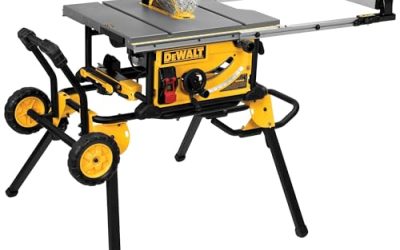
DEWALT DWE7491RS
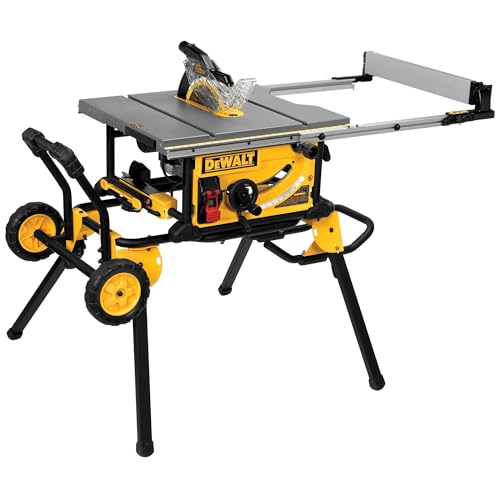
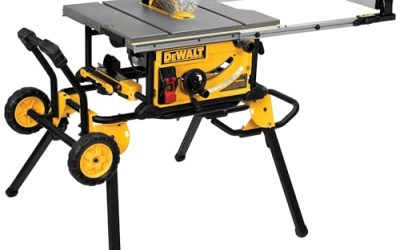
The DWE7491RS is the default recommendation in this class for a reason: it pairs the fence system buyers rate most highly with a rip capacity that handles full sheets, and wraps both in a rolling stand that folds down for transport. The rack and pinion telescoping fence adjusts quickly and holds parallel, which is what makes repeat rips come out identical without constant measuring.
It is a full-size jobsite saw rather than a compact one, and it behaves like it. The 15-amp motor runs at 4,800 RPM, the table gives sheet goods proper support, and onboard storage keeps the guard, push stick and miter gauge with the saw. If you buy one saw in this class to serve a garage shop and occasional site work, this is the one the rest of the list is measured against.
Specs
- 10-inch blade; 15-amp motor; 4,800 RPM; rip capacity 32-1/2 inches to the right of the blade; depth of cut 3-1/8 inches at 90 degrees; rack and pinion telescoping fence; rolling stand included; modular guarding system with riving knife; onboard accessory storage
Best for: Most buyers who want one saw for shop and site
Watch out for: It is one of the heavier packages in the class once the stand is attached, and the included blade is a general-purpose one most owners replace for fine work
Metabo HPT C10RJS

The C10RJS wins this class on one number: 35 inches of rip capacity to the right of the blade, the widest here, with 22 inches more to the left. That comes from a telescoping table extension on top of an already large 28-3/4 by 22 inch table, so wide panels and cabinet parts are supported properly instead of hanging off the edge while you push them through.
The rest of the saw matches that ambition. The 15-amp motor turns at 4,500 RPM with an electric brake, the fold and roll stand has an adjustable foot for uneven ground, and the controls sit at the front where you can reach them without walking around the saw. It is a big, heavy package, but if sheet goods are your main work, the extra width is worth more than the weight costs you.
Specs
- 10-inch blade; 15-amp motor; 4,500 RPM; rip capacity 35 inches right and 22 inches left of the blade; depth of cut 3-1/8 inches at 90 degrees and 2-1/4 inches at 45 degrees; table size 28-3/4 by 22 inches; fold and roll stand with adjustable foot; electric brake; 40-tooth blade included; weight 96 lb
Best for: Ripping wide panels and sheet goods
Watch out for: At 96 lb it is the heaviest saw here, and the fence is a clamp style rather than rack and pinion, so it rewards a quick square check after big moves
SKILSAW SPT99-11
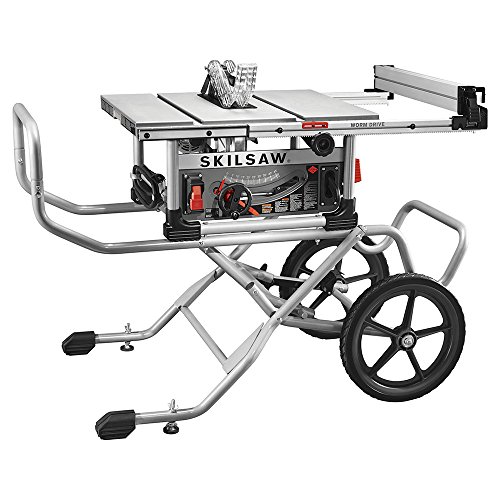
The SPT99-11 takes a different route to power. Its worm drive gearing trades blade speed for torque, which is what you feel when a saw keeps feeding through wet framing lumber or thick hardwood instead of bogging down. That gearing also produces the deepest cut in this group, 3-5/8 inches at 90 degrees, enough to slice 4x stock in a single pass.
Capacity is close behind the leaders at 30-1/2 inches of rip, the fence is rack and pinion, and the rolling stand rides on 16-inch wheels that handle rough ground and thresholds better than the small casters on lighter saws. The trade is weight and size: this is a saw you roll, not carry, and it asks for more storage room than anything else here except the Metabo.
Specs
- 10-inch blade; 15-amp worm drive motor; rip capacity 30-1/2 inches right and 16-1/2 inches left of the blade; depth of cut 3-5/8 inches at 90 degrees; bevel capacity up to 47 degrees; rack and pinion fence; rolling stand with 16-inch wheels; weight 94.3 lb
Best for: Thick stock and heavy framing lumber
Watch out for: Worm drive torque is wasted on thin sheet goods, and at 94.3 lb with a large folded footprint it is the wrong pick for small spaces or frequent vehicle loading
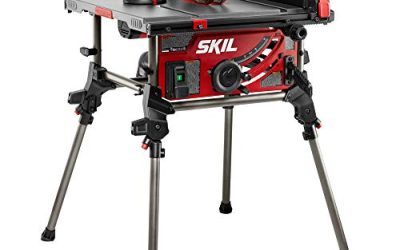
SKIL TS6307-00
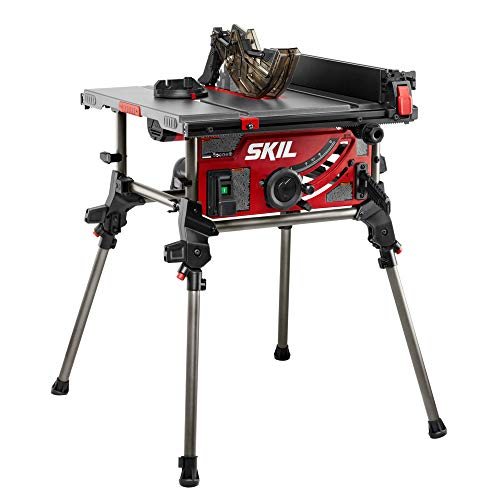
The TS6307-00 is the value route into this class, and it succeeds by keeping the features that matter. It is a full 10-inch, 15-amp saw with a rack and pinion fence, 25-1/2 inches of rip capacity and a depth of cut of 3-1/2 inches at 90 degrees, which is actually deeper than the DEWALT above it. The legs are integrated into the saw and fold flat, so there is no separate stand to buy, store or forget.
Where the saving shows is in refinement rather than capability. The table is coated cast aluminum rather than a ground surface, the stand is a folding leg set rather than a rolling frame, and the included 24-tooth blade is a framing blade. For a first jobsite saw, a renovation project, or a backup saw for a crew, those are sensible places to save.
Specs
- 10-inch blade; 15-amp motor; 4,600 RPM; rip capacity 25-1/2 inches right and 14 inches left of the blade; depth of cut 3-1/2 inches at 90 degrees and 2-1/2 inches at 45 degrees; bevel range minus 2 to 47 degrees; rack and pinion fence; integrated folding stand; 24-tooth carbide blade included; weight 51.2 lb
Best for: Buyers who want the jobsite basics covered for less
Watch out for: The folding legs lack wheels, so moving it means carrying 51.2 lb, and the rip capacity will not handle the widest cabinet parts without a second setup
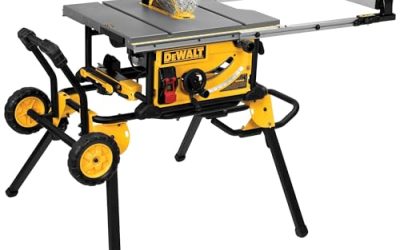
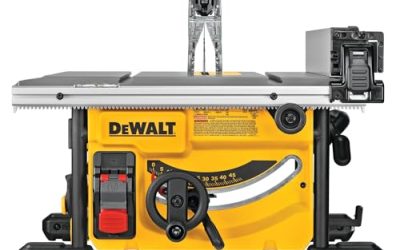
DEWALT DWE7485

The DWE7485 shrinks the jobsite formula around an 8-1/4 inch blade. That smaller blade is the whole point: the saw is compact enough to live in a van, carry up stairs, or share a small workshop with everything else you own, while keeping the rack and pinion fence and 24-1/2 inches of rip capacity that make the bigger DEWALT saws accurate. The motor spins the smaller blade at 5,800 RPM, so cut quality on trim and sheet goods stays clean.
The compromises are physical. Depth of cut is lower than any 10-inch saw here, so thick stock needs two passes or a different tool, and the smaller table gives long boards less support. The metal roll cage frame is built to be knocked around in transport, which suits finish carpenters and remodelers who set up in a different room every week.
Specs
- 8-1/4-inch blade; 15-amp motor; 5,800 RPM; rip capacity 24-1/2 inches to the right of the blade; bevel capacity up to 48 degrees; rack and pinion telescoping fence; metal roll cage frame; modular guarding system with onboard storage; stand sold separately in this configuration
Best for: Small shops, vans and frequent moves
Watch out for: The 8-1/4 inch blade limits depth of cut and blade choice compared with the 10-inch saws, and this configuration ships without a stand
Which One Fits
- Choose the DEWALT DWE7491RS if you want the balanced default: wide rip capacity, the fence system most owners praise, and a rolling stand, in one package that suits a garage shop or a working site.
- Choose the Metabo HPT C10RJS if sheet goods and wide panels dominate your work and the 35-inch rip capacity will save you from breaking sheets down with another tool first.
- Choose the SKILSAW SPT99-11 if you rip thick or wet lumber regularly and torque matters more to you than portability.
- Choose the SKIL TS6307-00 if you want a full-size 10-inch saw and stand for the least money in this class and can accept simpler fittings.
- Choose the DEWALT DWE7485 if space, stairs or vehicle room are your real constraints and your stock is mostly sheet goods and trim.
Common Mistakes
Buying on motor size alone. Every saw in this class runs a 15-amp motor. The differences that show up in your cuts are fence accuracy, table flatness and blade quality. A mid-priced saw with a good fence and a sharp blade outperforms a stronger saw with a wandering fence.
Ignoring rip capacity until the first sheet. A saw that cannot rip 24 inches cannot halve a sheet of plywood, which is the most common large cut in home woodworking. Check the right-of-blade figure before buying, and remember the left figure matters for bevel work and some sled setups.
Skipping the stand in the budget. A jobsite saw without a stand ends up on the floor, a tailgate or a wobbly bench, all of which hurt accuracy and safety. If the saw you want ships without one, plan for the stand or a solid bench as part of the same purchase, as with the compact DEWALT above.
Judging by the included blade. Stock blades are chosen for durability on site, not for clean edges in plywood or hardwood. Nearly every owner in this class buys a dedicated rip or combination blade soon after the saw. Factor that in, and do not reject a good saw because its bundled blade leaves a rough edge.
FAQ
How much rip capacity do you actually need?
Enough to halve a 4 by 8 sheet, which means at least 24 inches to the right of the blade. All five picks clear that bar. Wider capacities, 30 inches and up, pay off if you build cabinets or rip wide panels often, because the sheet stays supported and you avoid a second breakdown step.
Is an 8-1/4 inch saw enough, or do you need 10 inches?
For sheet goods, trim and 2x material, the 8-1/4 inch DEWALT here is enough and far easier to move. You need a 10-inch saw when you regularly cut stock thicker than about 2-1/2 inches, or when you want the widest choice of blades and dado sets. Depth of cut, not power, is the real dividing line.
Can these saws cut dadoes?
Most jobsite saws in this class accept a dado stack of limited width, commonly up to 13/16 of an inch, with a separate dado throat plate. Check the manual for your exact model before buying a stack, and note that the compact 8-1/4 inch saw is the most restricted of the group.
Do you need a stand for a jobsite saw?
For regular use, yes. A stand sets the table at a safe working height and keeps the saw stable on uneven ground. Three picks here include rolling stands, the SKIL folds its legs flat instead, and the compact DEWALT is the one model where bench mounting is a realistic alternative because of its size.
Final Verdict
Within the under 1000 dollar class, the DEWALT DWE7491RS is the safest single recommendation: accurate fence, wide rip capacity and a rolling stand in one proven package. The Metabo HPT C10RJS beats it on sheet capacity, the SKILSAW SPT99-11 beats it on thick stock, and the SKIL TS6307-00 delivers the same basic formula for less. Pick the DEWALT DWE7485 only when size is the deciding factor. Decide by the material you cut most, and every saw on this list will feel like money spent in the right place.