Key takeaways
- Five 1/2 HP submersible well pumps compared by flow, head, voltage and casing size, so you can match a pump to your well depth and household demand.
A half-horsepower submersible well pump is a narrow choice, and that narrowness is exactly why the decision matters. Too little lift leaves showers weak and a pressure tank cycling constantly, while a pump sized for a much deeper well wastes electricity and shortens its own service life through constant cycling. The real question is not which pump looks strongest on paper, but which one matches the depth to your pumping water level, the flow your household draws at once, and the voltage already wired to your wellhead.
This guide is for homeowners replacing a failed pump, for buyers setting up a small household well, and for anyone comparing a first submersible against a jet pump that has struggled with depth. Every pump below is a 1/2 HP submersible well pump, chosen from its Amazon listing by motor size, flow, head, voltage, wiring, and casing diameter, so the comparison stays on models that belong in the same well.
Quick Picks
As an Amazon Associate we earn from qualifying purchases
| Product | Best for | Key spec from title |
|---|---|---|
| VEVOR Deep Well Submersible Pump 1/2 HP 115V | Standard household circuits | 1/2 HP, 115V, 28 GPM, 167 ft head |
| Red Lion RL12G05-2W2V | Simple 230V replacement without a control box | 1/2 HP, 12 GPM, 2-wire, 230V |
| Goulds 10HS05422C | Everyday household supply at moderate depth | 1/2 HP, 10 GPM, 230V, 2-wire |
| Hallmark Industries MA0343X-4 | High-flow demand on a 110V supply | 1/2 hp, 110V, 25 GPM, 150 ft head |
| Grundfos 10SQ05-160 | Narrow 3-inch casings and gentle starting | 1/2 HP, 240V, 10 GPM, 160 ft head |
How to Choose
Match head to depth to water, not to total well depth
Head is the vertical lift a pump can manage, and the number that counts is the depth to the pumping water level, not the depth of the drilled hole. A pump rated for 167 feet of head does not deliver its maximum flow at that height; flow falls as lift rises, so a household drawing water from 120 feet down needs a pump whose curve still leaves enough flow at that lift for a shower and a tap running together. Measure the static water level, then ask your driller or installer for the pumping level under load. Choosing by total depth alone either strands you with weak pressure or pushes you toward a larger motor your well never needed.
Read flow the way your household actually uses water
Flow in gallons per minute looks simple until two fixtures run at once. A single bathroom household can manage on modest flow, while a home with two bathrooms, a washing machine, and garden taps needs a pump that keeps pressure steady when demand peaks. Maximum flow is a laboratory figure at almost no lift, so compare the flow each listing pairs with its head rating instead of treating the biggest GPM number as the winner. A 10 GPM pump that holds its flow at your depth serves a family better than a 28 GPM pump whose output collapses once lift is added.
Settle voltage and wiring before you fall for a pump
Submersible well pumps in this class run on 110 to 115 volts or on 230 to 240 volts, and the two are not interchangeable. A 115V pump suits a standard residential circuit and a straightforward replacement, whereas a 230V pump needs the matching supply already run to the wellhead. Wiring matters just as much: a 2-wire pump carries its starting parts inside the motor and needs no control box, while a 3-wire pump needs a control box above ground. Confirm the breaker, the wire gauge over the drop length, and whether a control box is already installed before ordering anything.
Check casing diameter, discharge size, and installation help
A 4-inch pump does not fit a 3-inch casing, and a pump that fits with no clearance can jam on the way down or overheat in a tight bore. Measure the inside diameter of your casing, then match it to the pump body and leave room for the drop pipe, cable, and a torque arrestor. Discharge size decides which fittings and drop pipe you need, so a 1-1/4 inch outlet should meet pipe you can actually source. Because a submersible sits hundreds of feet down, plan for a licensed electrician and, unless you have pulled pumps before, a well professional for the install.
The 5 Best Options
VEVOR Deep Well Submersible Pump 1/2 HP 115V

Households on a standard 115V circuit get the easiest path here, since this VEVOR runs without a 230V supply or a separate control box. Its stainless steel body suits a 4-inch or larger casing, and the high maximum flow gives it room for a shower, a tap, and a washing machine drawing at overlapping times. The 33-foot cord keeps the electrical connection well above the pump itself, and the five-stage impeller stack is the part of the design that builds lift from a compact motor.
Specs
- 1/2 HP copper motor
- 115V, 60 Hz power supply
- 28 GPM maximum flow
- 167 ft maximum head
- 4-inch stainless steel body
- 33 ft electric cord
- 1-1/4 in NPT discharge
- Five thermoplastic impellers
- IP68 waterproof grade
Best for: Homes with a standard 115V circuit and a 4-inch or larger well casing.
Watch out for: Maximum flow and maximum head do not happen at the same time, so confirm the flow available at your actual pumping depth before buying.
Red Lion RL12G05-2W2V
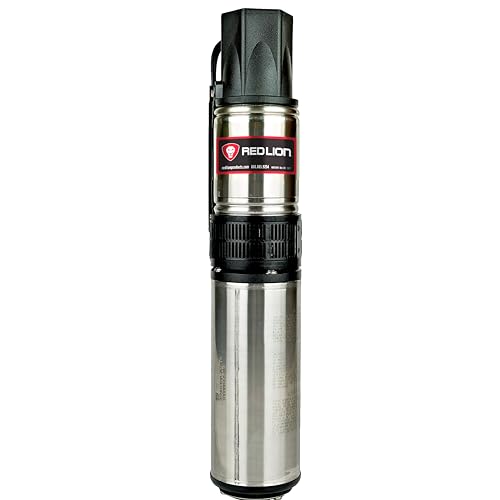
Red Lion built this pump around straightforward replacement work, with a 2-wire design that carries its starting mechanism inside the pump and removes the control box from the job. Its 12 GPM rating sits in the middle of this group, which fits a household that draws water steadily rather than in large simultaneous bursts. The stainless steel body and 4-inch diameter match common residential casings, and the 230V motor pairs with the supply most dedicated well circuits already use.
Specs
- 1/2 HP motor
- 12 GPM flow
- 230V power supply
- 2-wire plus ground
- 4-inch diameter
- Stainless steel construction
- Model number 14942402
Best for: Replacing a 230V submersible without adding or rewiring a control box.
Watch out for: This is a 230V pump, so a home wired only for 115V at the wellhead would need an electrician to change the supply first.
Goulds 10HS05422C

Goulds aims this pump squarely at ordinary household supply, pairing a 10 GPM flow with a 1/2 HP motor for homes where water sits within a moderate depth. Its 2-wire, 230V setup keeps the above-ground equipment simple, with no control box to mount or maintain, and the 4-inch body fits the casing size most residential wells use. The composite discharge head is the detail to note against the stainless models here, since it changes what the top of the pump is made from without changing the motor underneath.
Specs
- 1/2 HP motor
- 10 GPM flow
- 230V power supply
- 2-wire plus ground
- 4-inch diameter
- Stainless steel body
- Composite discharge head
Best for: A family well with moderate depth and steady, everyday water use.
Watch out for: Check the discharge head material against your installer’s preference, and confirm the pumping water level stays within the range this pump is sized for.
Hallmark Industries MA0343X-4
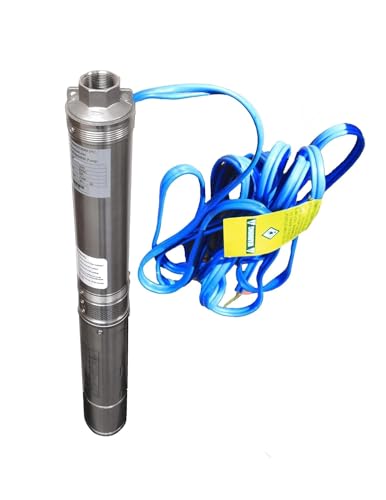
Hallmark pairs a high maximum flow with a 110V supply, which makes this pump unusual in a group where most higher-flow models need 230V. Its 25 GPM rating and 150-foot head suit a household that runs several fixtures at once and still wants a pump that plugs into the simpler voltage. The stainless steel, 4-inch body matches standard residential casings, and the single-voltage design removes any guesswork about which supply the pump expects.
Specs
- 1/2 hp motor
- 110V, 60 Hz power supply
- 25 GPM maximum flow
- 150 ft head
- Stainless steel construction
- 4-inch diameter
Best for: Homes needing strong flow from a 110V supply without rewiring for 230V.
Watch out for: The 25 GPM figure is a maximum at low lift, so check how much flow remains at your pumping depth and whether your wiring handles the current draw.
Grundfos 10SQ05-160

Grundfos built the 10SQ05-160 for wells other pumps cannot enter, with a 3-inch body that drops into narrow casings where a 4-inch pump would never fit. Its permanent-magnet motor uses soft starting, which eases the surge on startup, and built-in dry-run protection guards against the damage that follows when a well runs low. Rated at 10 GPM with 160 feet of head, it suits a household that values steady supply and motor protection over headline flow numbers.
Specs
- 1/2 HP motor
- 240V power supply
- 10 GPM at 160 ft head
- 3-inch diameter for 3-inch or larger boreholes
- Stainless steel construction
- Permanent-magnet motor
- Soft-start technology
- Dry-run protection
- 2-wire plus ground
Best for: Narrow 3-inch casings and wells where dry running is a real risk.
Watch out for: This listing is the 240V version, and Grundfos sells a separate 115V version under a different part number, so confirm the voltage on the listing before ordering.
Which One Fits Your Situation
You have only a standard household circuit at the well
Pick the VEVOR if your wellhead has 115V and you want the simplest electrical job, or the Hallmark if you also need higher flow from that same voltage. Both avoid a 230V run, yet the Hallmark trades some head for flow, so measure your pumping depth first. A 230V pump in this situation means paying an electrician to change the supply, which erases the convenience of the cheaper pump.
You are replacing a 230V pump and want no new boxes
Choose the Red Lion RL12G05-2W2V or the Goulds 10HS05422C, since both are 2-wire 230V pumps with no control box to install. The Red Lion offers the higher flow of the pair, while the Goulds suits a household with lighter simultaneous demand. Either one drops into a 4-inch casing, so the deciding step is matching flow to how many fixtures your family runs together.
Your casing is too narrow for a standard pump
Take the Grundfos 10SQ05-160, because its 3-inch body is the only pump here that fits a 3-inch borehole. Confirm the 240V supply first, since the 115V version is a different listing, and remember that its protection features matter most in a well where the water level can drop. Forcing a 4-inch pump into a tight casing risks a stuck pump and a costly retrieval.
Your household runs several fixtures at once
Look at the Hallmark MA0343X-4 for high flow on 110V, or the VEVOR for high flow with the deepest head rating in this group. Both list maximum flows well above the others, but neither delivers that figure at full lift, so ask for the flow at your pumping depth. If your water sits deep, the VEVOR keeps more useful lift, while the Hallmark suits shallower wells with heavy simultaneous use.
Common Mistakes
- Buying by maximum flow alone, without checking how much flow remains at the pumping water level.
- Ordering a 230V pump for a wellhead wired only for 115V, or the reverse, and discovering the mismatch on installation day.
- Choosing a 4-inch pump for a 3-inch casing, or assuming a pump will fit because the well itself is deep.
- Skipping the pumping water level and sizing from total well depth, which overstates the lift the pump must actually produce.
- Installing a submersible without a licensed electrician, a torque arrestor, or a check on wire gauge over the full drop length.
Frequently Asked Questions
Is a 1/2 HP submersible pump enough for a house?
A 1/2 HP submersible suits many small to medium households when the pumping water level is moderate and simultaneous demand stays reasonable. It struggles when water sits deep, several fixtures run together, or the home needs high flow for irrigation. Measure the pumping level and count the fixtures that run at once before deciding the motor is enough.
What is the difference between a 2-wire and a 3-wire well pump?
A 2-wire pump keeps its starting parts inside the motor, so it needs no control box above ground and wiring stays simpler. A 3-wire pump moves the starting parts into a control box at the surface, which makes those parts easier to service without pulling the pump. Both types can serve a household well when the voltage and wiring match.
How deep can a 1/2 HP submersible well pump lift water?
Lift depends on the pump curve, not on horsepower alone, and each model in this guide lists a different maximum head. Flow falls as lift rises, so a pump rated for 160 feet of head delivers far less water near that limit than at shallow depth. Use the pumping water level, not total well depth, and confirm the flow at that lift.
Do I need a control box for a 1/2 HP submersible pump?
It depends on the wiring: the 2-wire pumps in this guide need no control box, while a 3-wire pump does. A control box also houses overload protection on some setups, so a 2-wire pump still needs the correct breaker and wire size. Check the listing for the wire count and follow the manufacturer’s wiring diagram.