Our Short List of 3
All 3 Picks at a Glance
| Product | Specs | Action |
|---|---|---|
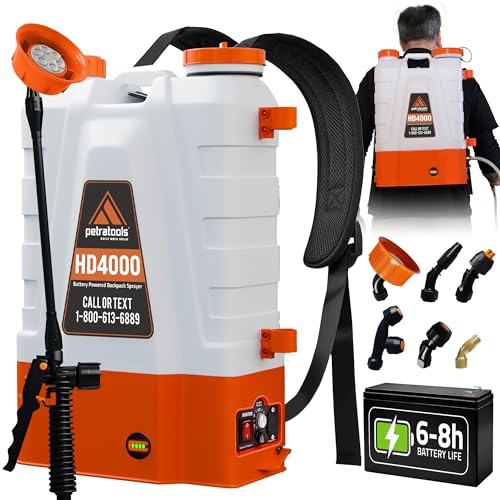 1. PetraTools HD4000 — Best for Long Spraying Days | Check price on Amazon | |
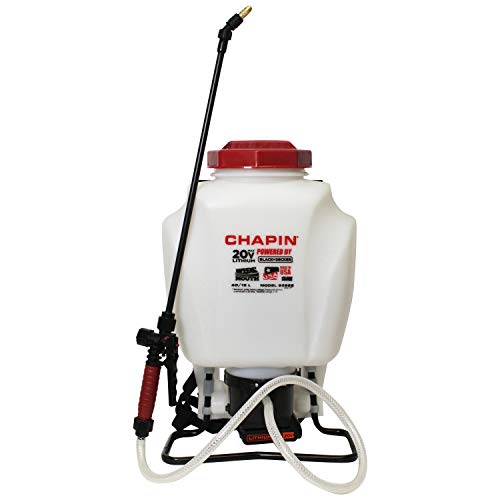 3. Chapin 63985 — Best Wide-Mouth Backpack Sprayer | Check price on Amazon | |
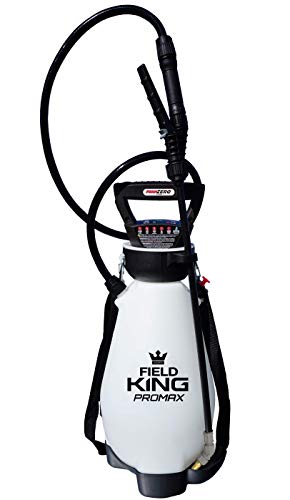 4. Field King 190571 — Best Compact Option for Spot Work | Check price on Amazon |
Key takeaways
- The best battery operated pesticide sprayer picks compared: backpack and handheld battery sprayers with tank size, pressure, runtime, seals and nozzle options for pest control.
As an Amazon Associate we earn from qualifying purchases.
Pumping a sprayer by hand works fine for a single rose bush. It stops being fine when you are walking rows of vegetables, treating the perimeter of a house, spraying fruit trees, or covering a large lawn with insecticide, herbicide, or fungicide. Pressure fades as your arm tires, coverage gets uneven, and the last part of the job often gets a weaker dose than the first. A battery operated pesticide sprayer fixes that core problem: an electric pump holds a steady pressure from a full tank to an empty one, so the spray pattern you start with is the spray pattern you finish with.
This guide compares four battery powered sprayers that suit pesticide work in different ways. Two are 4-gallon backpack units built for long sessions, one is a wide-mouth backpack sprayer on a common 20-volt battery platform, and one is a smaller 2-gallon lithium-ion sprayer for spot work and smaller properties. Every pick is a true battery operated sprayer — not a manual pump sprayer with a battery-shaped handle — and every specification below comes from the manufacturer’s product listing, not from detailed research claims.
Affiliate Disclosure: This article contains affiliate links. If you buy through a link on this page, we may earn a commission at no extra cost to you. Product names, specifications, and availability are taken from the manufacturers’ listings, and we have not personally tested these sprayers.
Quick Comparison
| Pick | Type | Tank | Battery | Pressure | Best For |
|---|---|---|---|---|---|
| PetraTools HD4000 | Backpack | 4 gal | 12V 8Ah lead-acid | 40–90 PSI adjustable | Longest runtime |
| Field King 190515 Professionals | Backpack | 4 gal | 18V 2.1Ah lithium-ion | Up to 40 PSI | Professional chemical work |
| Chapin 63985 | Backpack | 4 gal | 20V lithium-ion | 35–40 PSI | Easy filling and cleaning |
| Field King 190571 | Handheld tank | 2 gal | Internal lithium-ion | Pump Zero compressed air | Smaller jobs and spot spraying |
1. PetraTools HD4000 — Best for Long Spraying Days
The PetraTools HD4000 is the runtime pick in this group. Its listing describes a 4-gallon battery powered backpack sprayer built around a 12V 8Ah lead-acid battery, with a claimed runtime of 6 to 8 hours and more than 200 gallons sprayed per charge. For pesticide work, that matters because many treatments are not quick jobs: a full perimeter treatment, a large vegetable garden, an orchard row, or a property with outbuildings can easily stretch across several tank refills, and a sprayer that dies mid-route forces you to either wait for a recharge or finish the job unevenly by hand.
Pressure is adjustable from 40 to 90 PSI, which is the widest range here. Lower settings suit a gentle application on foliage where you want coverage without blasting leaves, while higher settings push a stream further for reaching into shrubs, under eaves, and up into small trees. The listing includes six interchangeable nozzles — shower, mist and stream options, double and single mist, flat fan, and a brass nozzle — so you can match the pattern to the chemical and the target instead of forcing one nozzle to do everything. A flat fan pattern, for example, gives even band coverage for lawn applications, while a stream reaches a wasp nest area or a crack-and-crevice treatment from a safer distance.
The wand extends to 34.5 inches and the hose is 48 inches, giving reasonable reach without dragging the tank. The 4-gallon tank is translucent HDPE with gallon markers, which helps when you are mixing concentrate to a label ratio — accurate mixing is not optional with pesticides, and a marked tank removes guesswork. Double-padded straps and a back pad address the obvious downside of a 4-gallon backpack: a full tank is heavy, and comfort features decide whether you actually finish the job in one session.
Two ownership notes come straight from the product’s profile. First, a lead-acid battery needs sensible storage care: charge it before long winter storage rather than leaving it flat, because lead-acid packs suffer when stored discharged. Second, the battery chemistry makes this unit heavier than the lithium-ion options below. If your spraying is measured in hours, the runtime is worth the weight. If your jobs are short, it may be more sprayer than you need.
2. Field King 190515 Professionals — Best for Regular Chemical Use
The Field King 190515 Professionals is a 4-gallon battery powered backpack sprayer from The Fountainhead Group, the company behind a long line of professional sprayers, and its design leans toward people who spray chemicals frequently rather than occasionally. The listing specifies an 18-volt, 2.1Ah lithium-ion battery providing up to 4 hours of spray time and up to 50 gallons of spray volume per charge, with a maximum pressure of 40 PSI and a vertical spray height of 24 feet.
The detail that matters most for pesticide use is the sealing material. The 190515 uses Viton seals and gaskets, which the manufacturer describes as engineered for maximum chemical resistance. Seals are the part of a sprayer that chemical exposure attacks first, and a sprayer used with insecticides, herbicides, and fungicides week after week lives or dies by whether its seals swell, crack, and start leaking down your back. A concealed battery compartment also protects the battery from impact and fluid exposure, which is a thoughtful touch on a tool that gets filled, carried, and set down on rough ground.
The shut-off is a professional style assembly with a lockable trigger to reduce hand fatigue, a nickel-plated brass poppet, and an in-line filtration system that is easy to clean. Filtration matters more than it sounds: a partially clogged nozzle changes your application rate, and with pesticides an uneven rate means some areas are under-treated and others over-treated. Six nozzles are included, including an adjustable brass nozzle that moves from solid stream to fine mist, a low-volume flat fan for foliage and confined areas, a high-volume flat fan for broad coverage, and a foaming nozzle.
The harness is fully padded with adjustable straps, a waist belt, and a chest strap, and the unit weighs 14.15 pounds empty. An integrated carry handle and wand storage make it easier to move between treatment areas. If you spray on a schedule — a groundskeeper, a small farm, a homestead, or a homeowner with a large and pest-prone garden — this is the pick built around chemical resistance and serviceable parts rather than maximum pressure.
ASIN: B07C814RC4
3. Chapin 63985 — Best Wide-Mouth Backpack Sprayer
Chapin is one of the oldest names in sprayers, and the 63985 takes a different approach to the battery question: it runs on a 20-volt lithium-ion battery from the Black & Decker platform. The listing and reviews describe up to 1.75 hours of continuous spraying and roughly 50 gallons per charge, at a working pressure of about 35 to 40 PSI with a spray stream reaching around 35 feet. That runtime is shorter than the two picks above, but the platform is the point — if you already own compatible 20V batteries for household tools, a spare pack turns a short runtime into a non-issue, because swapping a battery takes seconds.
The 4-gallon tank has a 6-inch wide mouth, the largest opening in this group. Anyone who has tried to pour mixed pesticide through a small filler neck without splashing concentrate on their hands and the outside of the tank will understand why this matters. A wide mouth makes filling safer, mixing easier, and — just as important — cleaning far more thorough. Pesticide sprayers must be rinsed properly between chemicals, because residue from a herbicide left in a tank can damage plants when you next spray an insecticide on them. A tank you can actually reach into and scrub gets cleaned properly; a tank you cannot tends to get a token rinse.
Chapin also fits a Santoprene seal in the pump, a material chosen for chemical resistance, and the unit is notably light for a 4-gallon battery sprayer at around 10.5 to 12 pounds depending on the listing source. Padded shoulder straps and a backrest keep it comfortable, and three nozzles cover the common patterns. Choose the Chapin if your spraying sessions are moderate in length, you value easy filling and genuinely thorough cleaning, or you already live on its battery platform.
4. Field King 190571 — Best Compact Option for Spot Work
Not every pesticide job needs four gallons on your back. Treating a few fruit trees, spot-spraying weeds in beds, applying insecticide to a greenhouse bench, or handling a small suburban yard calls for something lighter that you can grab, use, and rinse quickly. The Field King 190571 is a 2-gallon sprayer that uses an internal rechargeable lithium-ion battery to power an electric air compressor, a design Field King calls Pump Zero technology: the pump pressurises the tank with air, so you never pump by hand and the pressure does not depend on your arm.
The manufacturer describes it as a compressed-air style tank sprayer designed for water-soluble solutions such as herbicides and pesticides, and for weed prevention and remediation, pest control, fertilising, and watering. Because the battery drives a compressor rather than a liquid pump, the chemical does not pass through the pump mechanism in the same way, which simplifies rinsing. The 2-gallon size also means you mix less chemical per session — an underrated advantage, because leftover mixed pesticide is a storage and disposal problem. Mixing only what a small job needs is both safer and less wasteful.
The trade-offs are capacity and pace. Two gallons means more refills on a large property, and a compressor design suits steady, moderate application rather than high-volume work. For apartments with balconies, small gardens, greenhouses, and targeted treatments, though, this is the most manageable pick here, and it is the one most likely to be used often simply because it is easy to pick up.
How to Choose a Battery Operated Pesticide Sprayer
Tank size versus weight. A gallon of mixed spray weighs a little over eight pounds, so a full 4-gallon backpack sprayer carries more than thirty pounds of liquid before you count the sprayer itself. Bigger tanks mean fewer refills and fewer mixing sessions, but if the weight stops you halfway through a job, a 2-gallon unit you can handle comfortably will do better work. Match the tank to the largest job you do regularly, not the largest job you can imagine.
Battery runtime and chemistry. Lead-acid packs, like the one in the HD4000, deliver long runtimes and lower cost but weigh more and need to be stored charged. Lithium-ion packs are lighter and hold a charge in storage better, and platform batteries — such as the Chapin’s 20V pack — let you swap in a spare. Think in gallons per charge rather than hours alone: a sprayer that covers fifty gallons per charge handles most residential properties without a break.
Pressure and nozzles. Pesticide application is about controlled coverage, not raw force. Adjustable pressure and a choice of nozzles let you lay a fine mist on foliage, a flat fan band on a lawn, or a stream into a shrub. More pressure than the label rate assumes does not improve a treatment; it increases drift, and drift wastes chemical and can damage plants you were not treating.
Seals and chemical resistance. Look for Viton or Santoprene seals if you spray often. Standard seals degrade with repeated chemical exposure, and a leaking backpack sprayer is not just annoying — it soaks pesticide into your clothing. Also confirm the sprayer is intended for the type of product you use; some chemicals and solvents are outside what a given sprayer’s materials are rated for, and the product label and the sprayer manual both deserve a read.
Cleaning and storage. Rinse the tank, hose, wand, and nozzle after every use, and run clean water through the system. Never store mixed pesticide in the tank. Store the sprayer empty, with the battery cared for according to its chemistry, and keep chemicals themselves locked away from children and animals in their original labelled containers.
Safety Notes for Pesticide Spraying
Always follow the label of the specific product you are spraying: the label sets the mixing ratio, the protective equipment, the re-entry interval, and where the product may legally be applied. Wear gloves, eye protection, long sleeves, and any respirator the label requires, and keep people and pets off treated areas for the stated interval. Spray in calm conditions to limit drift, avoid spraying flowering plants where pollinators are active, and never mix different chemicals unless the labels explicitly allow it. A battery sprayer’s steady pressure helps you apply the intended rate evenly, but it does not change the rules on the label.
Frequently Asked Questions
Can I use the same sprayer for herbicide and insecticide? You can, but only with thorough cleaning between uses, including rinsing the hose, wand, and nozzle, because herbicide residue can injure plants you later treat with another product. Many frequent users keep a dedicated herbicide sprayer for exactly this reason.
How long does a battery sprayer run per charge? It varies widely by design. In this group, claimed figures range from about 1.75 hours for the Chapin 63985 to 6 to 8 hours for the PetraTools HD4000, with the Field King 190515 claiming up to 4 hours and about 50 gallons per charge. Treat manufacturer figures as best-case numbers and expect less with high pressure settings.
Is higher PSI always better for pest control? No. Higher pressure increases reach and drift. Most foliage and lawn applications are better served by moderate pressure and the right nozzle, which gives even coverage where the pest actually is.
What maintenance does a battery sprayer need? Rinse after every use, clean the filter and nozzles regularly, check seals for swelling or cracking, and store the battery as its chemistry requires — lead-acid packs should not be left discharged, while lithium-ion packs prefer partial charge for long storage.
Verdict
For the longest working day, the PetraTools HD4000 pairs a 4-gallon tank with the longest claimed runtime and the widest pressure range. For frequent chemical work, the Field King 190515 Professionals brings Viton seals, a serviceable shut-off, and a protected battery compartment. For easy filling, thorough cleaning, and battery-platform convenience, the Chapin 63985 is the practical choice. And for small jobs done often, the Field King 190571 removes the pumping without the backpack. Any of the four will give you steadier, more even pesticide coverage than a hand pump — which is the entire point of going battery operated.