Key takeaways
- Compare the best RV refrigerators for 2026: 12V compressor and propane absorption models with cutout dimensions, power draw, and capacity compared.
The best RV refrigerator for most rigs is a 12V compressor model sized to your existing cabinet cutout: it cools fast, holds steady temperatures on rough roads, and runs directly from the house battery bank and solar array without propane. If you camp off grid for long stretches without much battery capacity, a three-way absorption model that also runs on propane is still the practical alternative. This guide compares five built-in RV refrigerators, from compact 4.4 cubic foot units for vans and small trailers to full-height 10 cubic foot models that replace a factory absorption fridge.
As an Amazon Associate, we earn from qualifying purchases.
Every model below is a built-in refrigerator designed to mount in a cabinet opening. Portable 12V compressor chests are a different product type with different strengths, so they are not mixed into this list.
Table of Contents
- How We Chose These RV Refrigerators
- RecPro 4.4 Cu Ft 12V RV Refrigerator
- Everchill 4.5 Cu Ft 12V RV Refrigerator
- RecPro 6.3 Cu Ft Gas and Electric RV Refrigerator
- Norcold N10DCSSR Polar-Series 10 Cu Ft Refrigerator
- Dometic DMC4101 10 Cu Ft 12V Refrigerator
- How to Choose the Right RV Refrigerator
- Frequently Asked Questions
- Conclusion
- Product and ASIN Reference
How We Chose These RV Refrigerators
An RV refrigerator is a permanent appliance, so the shortlist started with fit. Each pick publishes cutout or overall dimensions that match common factory openings, from the small enclosures in camper vans to the tall openings left behind by older 8 and 10 cubic foot absorption fridges. Models without published dimensions or without a verifiable retail listing were left out.
Power came next. Four of the five picks run on 12V DC only, which suits solar-equipped rigs because the fridge draws straight from the battery bank with no inverter losses. For each 12V model, the published current draw or circuit requirement is listed in its specs so you can size wiring and fusing correctly. The fifth pick is a three-way absorption unit included for campers who rely on propane during long stays away from hookups.
Finally, every model had to be a refrigerator built for vehicle installation, with travel-rated door latching, ventilation designed for an enclosed cabinet, and construction meant to tolerate vibration. Residential mini fridges and thermoelectric coolers did not make the cut.
RecPro 4.4 Cu Ft 12V RV Refrigerator
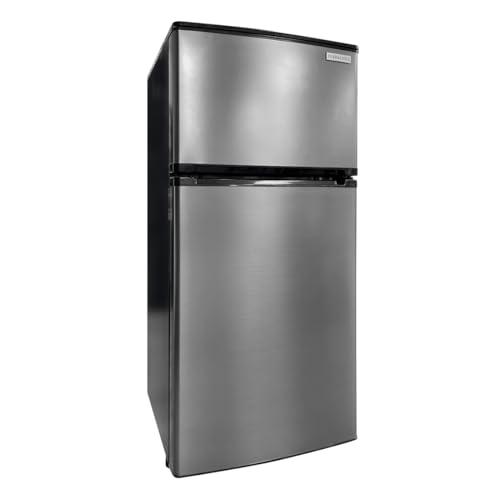
The RecPro 4.4 cubic foot model is the compact pick for camper vans, truck campers, and small travel trailers where the fridge opening is under four feet tall. It runs on 12V DC only, so it ties directly into the house battery system and keeps cooling while you drive, with no propane plumbing and no inverter in the chain.
Inside, the layout is a single-door design with adjustable shelves and a separate freezer space, and the frost-free system means you are not chipping ice out of the freezer box between trips. The door is reversible, which matters in tight galley layouts where the swing direction decides whether the fridge can open past a dinette or a bathroom door. A built-in door lock keeps the contents inside when the road gets rough.
At 43.5 inches tall, this is a budget-tier option that fits openings many larger fridges cannot, and its modest size keeps the current draw in line with smaller battery banks. Measure your opening carefully, because the 23.5 inch depth needs a genuinely deep cabinet.
Specs:
- Capacity: 4.4 cubic feet
- Model: RP-RFG
- Power: 12V DC
- Dimensions: 19.5 inches wide x 23.5 inches deep x 43.5 inches high
- Defrost: Frost-free
- Door: Reversible, with built-in travel lock
- Shelves: Adjustable
Everchill 4.5 Cu Ft 12V RV Refrigerator
The Everchill 4.5 cubic foot refrigerator covers the same compact class as the RecPro above but with a stainless steel finish and a freezer-on-bottom configuration that puts fresh food at eye level. It is a mid-range pick for owners who want the small footprint without the basic rental-fleet look.
This unit runs on 12V DC and is built by Way Interglobal, the company behind the Everchill line fitted in many factory-built trailers, so replacement parts and documentation follow the same channels as the fridge that may already be in your rig. The left-hand hinge suits galleys where the fridge sits to the right of the walkway, and at roughly 60 pounds it is light enough for a two-person install without a lift.
The freezer-on-bottom layout separates frozen goods from the fresh food section instead of relying on a small ice box inside a single compartment, which makes it a better fit for multi-day trips where frozen meals are part of the plan.
Specs:
- Capacity: 4.5 cubic feet
- Model: WD-127FDC/LHH (2022302334)
- Power: 12V DC
- Configuration: Freezer on bottom
- Door: Left-hand hinge, stainless steel finish
- Weight: About 60 pounds
RecPro 6.3 Cu Ft Gas and Electric RV Refrigerator
The RecPro 6.3 cubic foot gas and electric model is the absorption pick in this lineup, and it exists for one reason: propane. It runs on 120V AC at a campground, on 12V DC, or on LP gas, so a long off-grid stay does not depend on how much sun your panels collected that day. For dry campers with modest battery banks, that flexibility is worth more than compressor efficiency.
Absorption cooling has no moving compressor parts, so it runs silently, but it comes with the known trade-offs. The cabinet must sit close to level when parked, the exterior vents need to stay clear, and cooling is slow, so plan to run it for roughly half a day before loading food. The fresh food section holds about 4.6 cubic feet with a separate ice compartment making up the rest of the capacity.
The door is reversible with an optional hardware kit, and the enclosure dimensions match the common mid-size openings used by older two-door absorption fridges, which makes this a realistic like-for-like replacement. This is a mid-range choice: more flexible than any 12V-only model, less efficient per cubic foot.
Specs:
- Capacity: 6.3 cubic feet total (about 4.6 cubic feet fresh food, 1.4 cubic feet ice compartment)
- Model: RP-2166
- Power: 120V AC, 12V DC, or propane (three-way absorption)
- Overall dimensions: 23.4 inches wide x 24.2 inches deep x 53.4 inches high
- Enclosure opening: 23.9 inches wide x 24.2 inches deep x 53.9 inches high
- Gas consumption: 40 grams per hour
- Weight: About 134 pounds
- Door: Reversible (hardware kit sold separately)
Norcold N10DCSSR Polar-Series 10 Cu Ft Refrigerator
The Norcold Polar-Series N10DCSSR is a premium 10 cubic foot 12V compressor refrigerator aimed at owners replacing a large factory absorption fridge. It fits a cutout roughly 59.9 inches high, 23.5 inches wide, and 24 inches deep, yet delivers a full 10 cubic feet of storage, with stainless steel doors and a right-hand hinge.
The published current figures are what make this model easy to plan around: about 8.3 amps in standard mode and about 6.2 amps in the battery-saving night mode, which automatically quiets the compressor and trims consumption while you sleep. For a solar-equipped rig, that night mode is the difference between a fridge that merely works and one that leaves charge in the bank for the morning.
Norcold has sold RV refrigerators through dealer networks for decades, and this model has been listed since 2019, so installation guidance and service familiarity are widely available. The trade-off is weight: at about 130 pounds, installation is a two-person job with the old fridge removed and the opening measured twice.
Specs:
- Capacity: 10 cubic feet
- Model: N10DCSSR
- Power: 12V DC compressor
- Current draw: About 8.3 amps standard mode, about 6.2 amps night mode
- Cutout: About 59.9 inches high x 23.5 inches wide x 24 inches deep
- Doors: Stainless steel, right-hand hinge
- Weight: About 130 pounds
Dometic DMC4101 10 Cu Ft 12V Refrigerator
The Dometic DMC4101 is the other premium 10 cubic foot option, and its headline trick is packaging: Dometic designed it to deliver 10 cubic feet of capacity in the space of a typical 8 cubic foot cutout, which makes it a strong upgrade path for trailers built around smaller absorption fridges.
The variable-speed compressor adjusts its output to demand instead of cycling hard on and off, and the hidden digital control panel offers three cooling modes so you can trade cooling speed for quiet and efficiency. Inside, there are dual crisper drawers and tempered glass shelves under stainless steel doors with a right-hand hinge.
Plan the electrical side carefully. The DMC4101 specifies a 12V supply range of 10.5 to 17.0 volts with a circuit rated at 15 amps or more, with low-voltage cut-off at 10.4 volts to protect the battery bank. That is a heavier circuit than compact fridges need, so check your existing wiring run before assuming the swap is plug and play.
Specs:
- Capacity: 10 cubic feet
- Model: DMC4101
- Power: 12V DC (10.5 to 17.0 volts, circuit rated 15 amps or higher)
- Compressor: Variable speed, three cooling modes
- Dimensions: 23.6 inches wide x 27.5 inches deep x 59.6 inches high
- Doors: Stainless steel, right-hand hinge
- Interior: Dual crisper drawers, tempered glass shelves
- Weight: About 136 pounds
How to Choose the Right RV Refrigerator
Start with the opening, not the capacity. Measure the cutout height, width, and depth at several points, because RV cabinetry is rarely perfectly square, and compare those numbers with the enclosure dimensions in the installation manual rather than the outside dimensions on a store listing. A fridge that is one inch too deep does not fit at all.
Next, decide between compressor and absorption cooling. A 12V compressor fridge cools quickly, holds temperature on steep grades and rough roads, and runs directly from batteries and solar, which is why most new rigs ship with one. An absorption fridge runs on propane as well as electricity and operates silently, but it must sit close to level, needs clear exterior vents, and cools slowly. Choose absorption only if propane flexibility is a genuine requirement of how you camp.
Then do the power math. Multiply the fridge’s average current draw by 24 hours to estimate daily amp-hour use, and check that against your usable battery capacity and daily solar harvest. Models with a night or eco mode, like the Norcold above, cut that daily figure meaningfully. Finally, confirm the circuit: larger 12V fridges can require a dedicated run rated at 15 amps or more with the wire gauge the manual specifies for your cable length.
Frequently Asked Questions
Can a 12V RV refrigerator run entirely on solar power?
Yes, provided the battery bank and solar array are sized for it. A typical 10 cubic foot 12V fridge draws somewhere in the range of 100 to 200 amp-hours per day depending on ambient temperature and door openings, so most owners pair it with at least 200 amp-hours of usable battery capacity and enough panel wattage to replace that energy during daylight hours.
What size RV refrigerator fits my existing cutout?
Match the fridge to the enclosure dimensions in its installation manual, not to the capacity of the fridge you are removing. Modern 12V models often deliver more capacity in the same opening; the Dometic DMC4101, for example, provides 10 cubic feet in a space associated with older 8 cubic foot fridges. Measure height, width, and depth at the top, middle, and bottom of the opening before ordering.
Is an absorption or a compressor RV refrigerator better for boondocking?
It depends on your power system. With a generous battery bank and solar array, a 12V compressor fridge is simpler and cools more consistently. With a small battery bank and long stays, an absorption model running on propane avoids draining the batteries at all, at the cost of slower cooling and a requirement to park close to level.
How long can a 12V RV fridge run on one battery?
Runtime depends on the battery’s usable capacity and the fridge’s duty cycle. A single 100 amp-hour lithium battery offers roughly 100 usable amp-hours, so a fridge averaging 4 amps of draw with a 50 percent duty cycle uses about 48 amp-hours per day, giving close to two days of cooling before charging. Hot weather and frequent door openings shorten that figure.
Conclusion
For most RV owners replacing a fridge today, a 12V compressor model is the right call: the Norcold N10DCSSR suits full-size cutouts and careful power budgets, the Dometic DMC4101 squeezes 10 cubic feet into smaller openings, and the RecPro 4.4 and Everchill 4.5 cover compact vans and trailers. Keep the RecPro 6.3 gas and electric model on the list if propane independence matters more than efficiency. Measure the cutout, check the circuit rating, and any of these five will be a dependable centerpiece for the galley.