Our Short List of 3


All 4 Picks at a Glance
| Product | Specs | Action |
|---|---|---|
 1. Renogy Deep Cycle AGM 12 Volt 100Ah — Best Overall | Check price on Amazon | |
| 2. WEIZE 12V 100Ah Deep Cycle Battery, Group 31 — Best for Group 31 Trays | Check price on Amazon | |
| 3. ExpertPower 12V 35Ah LiFePO4 Deep Cycle — Best Lightweight Option for Smaller Loads | Check price on Amazon | |
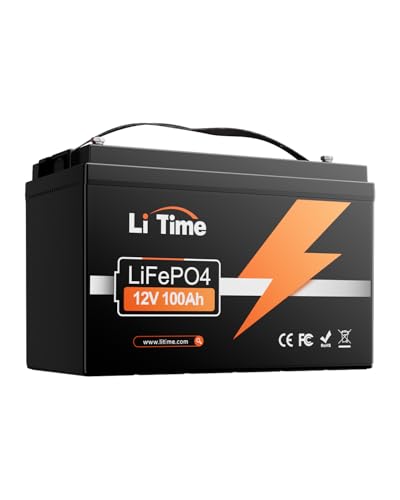 A Note on a Battery We Excluded | Check price on Amazon |
Key takeaways
- The best marine and RV deep cycle batteries compared: proven AGM house batteries and a lighter lithium option, with group sizes, usable capacity, charging voltages, and fit guidance for boats and RVs.
As an Amazon Associate we earn from qualifying purchases.
Affiliate Disclosure: This article contains affiliate links. If you buy through a link on this page, we may earn a commission at no extra cost to you.
A battery that serves both a boat and an RV has a harder life than most. On the water it is shaken, tilted, sprayed, and asked to run a trolling motor, electronics, lights, and a bilge pump far from shore power. In an RV it is cycled night after night by the fridge, furnace fan, water pump, and lights, then recharged by whatever the alternator, solar panels, or campsite hookup can give it. A starting battery is built for neither job: its thin plates deliver a short burst for cranking and suffer when deeply discharged. A true deep cycle battery uses thicker plates or lithium cells designed to be discharged and recharged hundreds of times. This guide compares three deep cycle batteries that genuinely serve both marine and RV house-power duty — two sealed AGM models in the popular 100 amp-hour class and one smaller lithium iron phosphate model for lighter installations — and explains how to size, charge, and look after whichever type you choose. Specifications below are taken from the manufacturers’ published data and product listings; we do not claim to have tested these batteries ourselves.
Quick Comparison
| Pick | Chemistry | Capacity | Group / Size | Weight | Best for |
|---|---|---|---|---|---|
| Renogy Deep Cycle AGM 12V 100Ah | AGM lead-acid | 100Ah | 13.1 x 6.9 x 8.6 in | 63.9 lb | Proven all-round house battery |
| WEIZE 12V 100Ah Deep Cycle AGM | AGM lead-acid | 100Ah | Group 31 | About 57–64 lb class | Larger Group 31 trays, trolling and house loads |
| ExpertPower 12V 35Ah LiFePO4 | Lithium iron phosphate | 35Ah | Compact case, M6 terminals | Far lighter than lead-acid equivalents | Small boats, kayaks, and light RV loads |
1. Renogy Deep Cycle AGM 12 Volt 100Ah — Best Overall
The Renogy 100Ah AGM is the default recommendation in this class for a straightforward reason: it is a genuine deep cycle battery from a maker that publishes complete specifications, and it has been sold in large numbers for RV, marine, cabin, and off-grid house power for years. Renogy states that more than 230,000 of these batteries have been sold worldwide, and the published figures are the ones a buyer actually needs: 12 volts, 100 amp-hours, a maximum discharge current of 1,100 amps for five seconds, a monthly self-discharge rate below three percent, and a rated life of around 500 cycles at 50 percent depth of discharge.
That cycle figure defines how you should use it. An AGM house battery lasts longest when you treat half its nameplate capacity as your working budget, so plan on roughly 50 usable amp-hours per cycle and recharge promptly afterwards. Within that discipline, the Renogy will run an RV fridge, LED lighting, a water pump, and device charging through a typical evening and night, and on a boat it handles house loads and moderate trolling motor use in the same spirit. The sealed AGM construction matters in both settings: there is no electrolyte to top up, no routine venting of charging gas to manage in normal use, and the battery tolerates the vibration and knocks of a trailer or a planing hull far better than a flooded battery with free liquid inside.
Practical details are equally sensible. The case measures 13.1 by 6.9 by 8.6 inches and the battery weighs 63.9 pounds — heavy, as all 100Ah lead-acid batteries are, so plan the lift into a boat locker or RV compartment accordingly. Terminal bolts are included, connections in series are supported without a stated limit, and up to four batteries can be paralleled for a larger bank. Renogy publishes a cyclic charge voltage of about 14.4 to 14.8 volts and a float range of 13.5 to 13.8 volts, with a maximum charge current of 30 amps, so any competent multi-stage charger with an AGM profile will treat it correctly. Choose the Renogy if you want the best-documented, most widely used AGM house battery in this size and you are content to work within the 50 percent discharge discipline that all lead-acid batteries demand.
2. WEIZE 12V 100Ah Deep Cycle Battery, Group 31 — Best for Group 31 Trays
The WEIZE 100Ah is the other natural candidate for a shared marine and RV role, and its distinguishing feature is format: it is a Group 31 battery, the largest of the common marine sizes, built for the trays, boxes, and hold-downs fitted to a great many boats and larger RVs. If your existing battery box is a Group 31 box, this battery drops into the space your old one leaves, which removes the measuring and modifying that a differently sized replacement can involve.
The specification follows the same honest pattern as the Renogy’s. It is a sealed, maintenance-free AGM battery rated at 12 volts and 100 amp-hours, with a stated maximum discharge current of 1,150 amps for five seconds and a self-discharge rate of about three percent per month. WEIZE lists the model for trolling motors, RVs, solar systems, marine use, camping, and off-grid service, and the heavy-duty calcium-alloy grid construction is aimed at service in both float and cyclic applications. The maker’s page gives dimensions of about 13 by 6.7 by 8.4 inches for the Group 31 case, consistent with the standard footprint.
In use, the same lead-acid rules apply: budget roughly half the rated capacity for daily cycling, recharge soon after use, and keep the battery on a maintainer during winter storage so self-discharge and cold do not quietly ruin it. The WEIZE typically competes on value within this class, and it carries a shorter stated warranty period than the Renogy in the listings reviewed, so weigh that if the two are close on the day you buy. Choose the WEIZE if your boat or RV is already built around a Group 31 battery and you want a like-for-like deep cycle replacement with published, plausible figures rather than a no-name battery with inflated claims.
3. ExpertPower 12V 35Ah LiFePO4 Deep Cycle — Best Lightweight Option for Smaller Loads
Not every boat or RV needs 100 amp-hours, and not every owner wants to lift 60-plus pounds into a tight compartment. The ExpertPower 35Ah is a lithium iron phosphate battery aimed at the lighter end of the same job: fish finders, lighting, small trolling motors on kayaks and small boats, a CPAP and lights in a small camper, or a compact backup bank. ExpertPower rates it at 12.8 volts nominal and 35 amp-hours, with a built-in battery management system, a maximum continuous discharge current of 35 amps, a charge voltage of 14.4 volts, and M6 terminals.
The lithium chemistry changes the arithmetic in two important ways. First, a LiFePO4 battery can be discharged far more deeply than an AGM without the same life penalty — ExpertPower quotes cycle life figures in the thousands depending on depth of discharge, against roughly 500 cycles at 50 percent for the AGM picks above — so a 35Ah lithium battery delivers usable energy closer to a much larger lead-acid battery than the nameplate numbers suggest. Second, it weighs a fraction of a comparable lead-acid battery, which matters on a small boat where weight distribution is not a trivial concern and in any installation where the battery must be carried in and out.
The cautions are real, though. The 35-amp continuous discharge ceiling rules out heavy inverter loads and large trolling motors; this is a battery for modest, steady draws. It needs a charger with a lithium profile, or at minimum one that delivers the stated charge voltage without an equalisation stage, and like all lithium batteries it should not be charged below freezing unless the maker states low-temperature protection — the built-in management system is a safeguard, not an invitation. Choose the ExpertPower if your loads are light, your space is tight, and the weight saving and deeper usable capacity justify moving to lithium at a smaller capacity.
A Note on a Battery We Excluded
How to Size a Marine and RV House Battery
Start from your daily loads, not from the battery shelf. Add up what you run between charges in amp-hours: a compressor fridge might draw an average of a few amps over the day, LED lights an amp or two for the evening, a water pump runs in short bursts, and a trolling motor is the heavyweight — a motor drawing 30 amps at moderate speed consumes 30 amp-hours for every hour of running. Once you have a daily total, apply your chemistry’s discipline. For AGM, buy roughly twice your daily need so you stay near the 50 percent discharge guideline; for LiFePO4 you can buy closer to the daily figure, keeping a modest reserve.
Then check the physical fit before anything else. Measure the tray or box, confirm the group size, check terminal type and position so your existing cables reach without strain, and be honest about the weight you can safely lift into place. Finally, check your charger. A battery is only as good as the charging it receives: AGM batteries want a multi-stage charger with an AGM profile and the voltages the maker publishes, while lithium batteries want a lithium profile. An old single-stage charger will quietly shorten the life of either chemistry.
Installation and Care That Apply to Both Settings
Secure the battery properly. A 60-pound battery that breaks loose in a seaway or a hard-braked RV is a genuine hazard, so use the tray, box, and hold-down the installation calls for, and keep terminals covered and cables protected from chafe. Keep connections clean and tight; a loose terminal creates heat, voltage drop, and the misleading impression that the battery itself is failing.
Recharge promptly after use and never leave a lead-acid battery sitting discharged — sulphation begins quickly and is the commonest cause of early AGM death. In storage, keep an AGM on a maintainer or recharge it monthly, since even a low self-discharge rate empties it over a winter. Lithium batteries store best partly charged and disconnected, with a check every few months. In a boat, keep the battery compartment ventilated and the battery clear of fuel lines and bilge water; in an RV, keep it clear of living-space heat sources and check the compartment after the first trips to be sure nothing has shifted.
Frequently Asked Questions
Can one battery really serve both a boat and an RV? Yes, provided it is a true deep cycle battery of the right capacity and group size for both installations, and you move it carefully with terminals protected. The picks above are all listed by their makers for both marine and RV service. Many owners instead fit one battery in each and keep the charging profiles matched to each location.
Is AGM or lithium better for marine and RV use? AGM is simpler, tolerant of standard chargers, and works with the alternators and converters already fitted to most boats and RVs. Lithium gives far more usable capacity per pound and per rated amp-hour, and lasts far longer in cycles, but costs more upfront and needs a compatible charger and cold-weather care. For a heavy 100Ah house bank on a budget, AGM remains the sensible default; for weight-critical or high-cycle use, lithium earns its premium.
Can I use one of these to start my engine as well? These picks are house batteries, chosen for deep cycling. Some dual-purpose marine batteries are built to do both jobs, but a dedicated deep cycle battery should not be your planned cranking battery. Keep starting and house duties separate where the installation allows it.
How long will a 100Ah battery run my fridge? Work it out from the fridge’s average draw. If it averages 3 amps, a 100Ah AGM used to half capacity gives roughly 16 to 17 hours; the same battery in lithium form, used more deeply, gives considerably longer. Your mileage varies with temperature, door openings, and what else is running.
The Bottom Line
For most boats and RVs, the Renogy 12V 100Ah AGM (ASIN: B075RFXHYK) is the safest all-round choice: complete published specifications, a long sales history, and charging requirements that match the equipment most owners already have. If your installation is built around a Group 31 box, the WEIZE 12V 100Ah Group 31 (ASIN: B0BGKHQQTP) is the like-for-like alternative with equally plausible figures. And if your loads are light and weight matters more than raw capacity, the ExpertPower 12V 35Ah LiFePO4 (ASIN: B0DM45MBYB) brings lithium’s deeper usable capacity and long cycle life to smaller boats and campers. Whichever you choose, size it from your real daily loads, charge it with the profile its chemistry requires, and recharge it promptly — those habits, more than any brand badge, decide how many seasons a deep cycle battery actually lasts.